From the Canticle to the Laudario of Cortona
4 concerts at the Sanctuary of San Damiano in Assisi
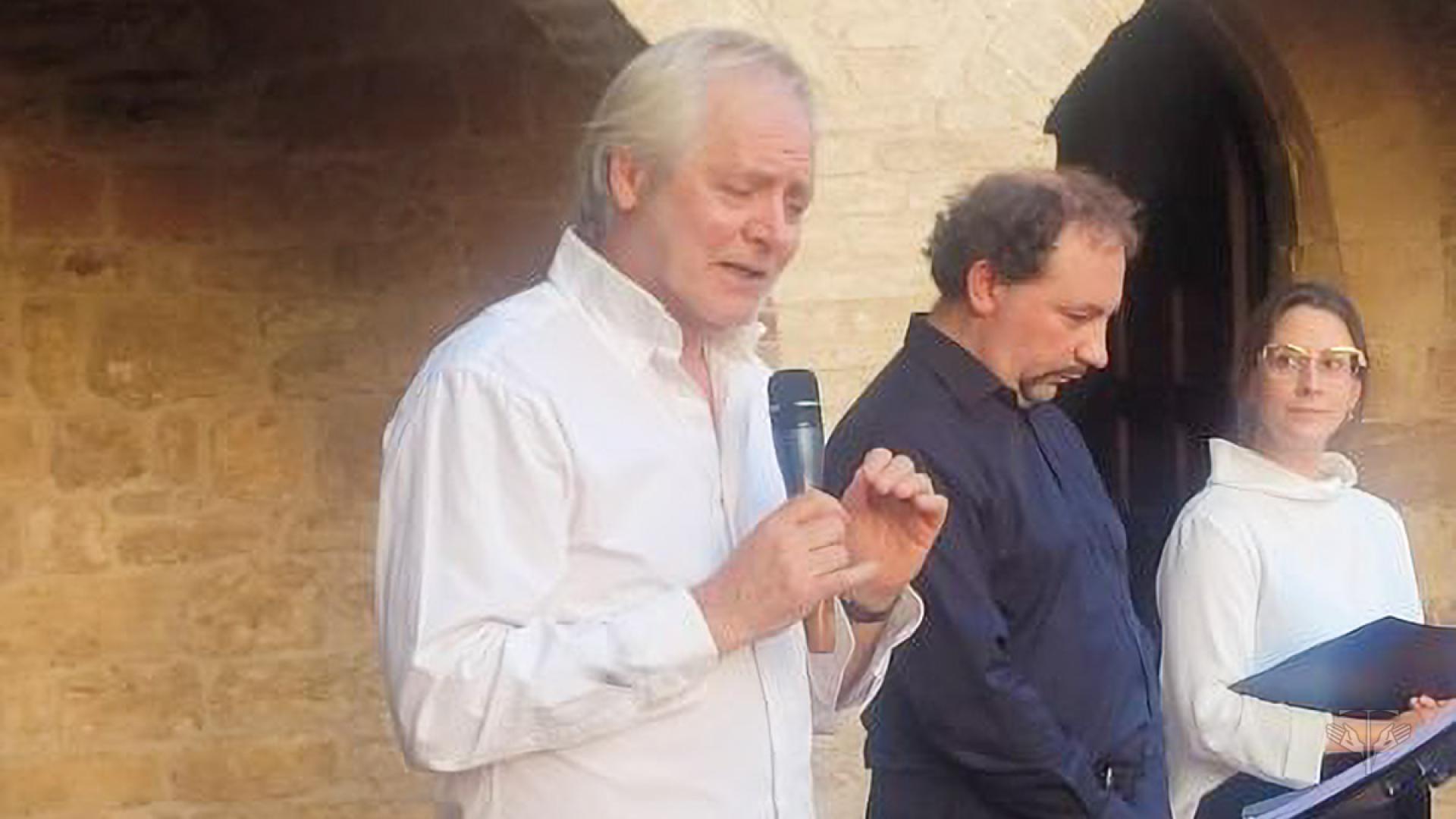
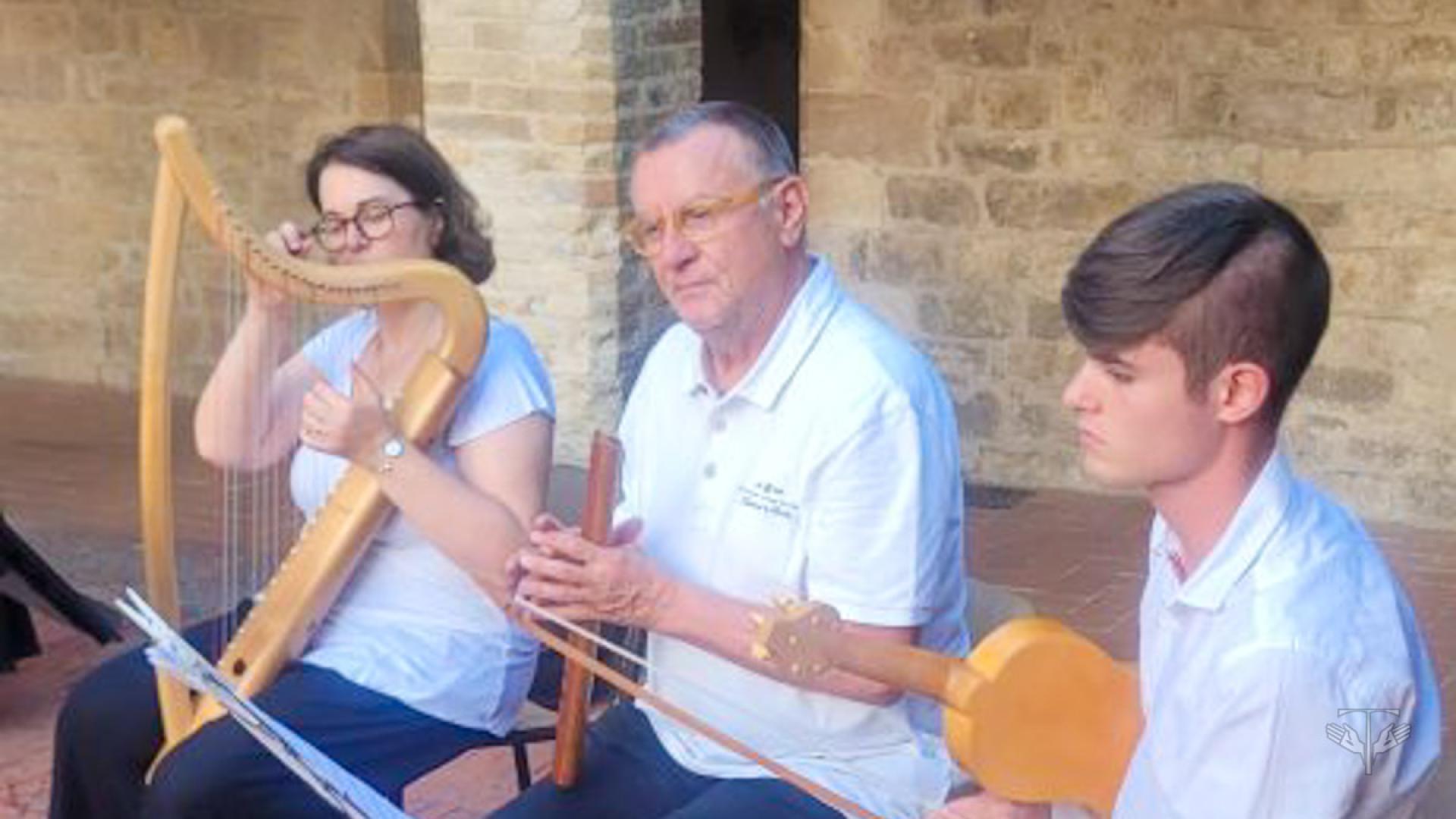
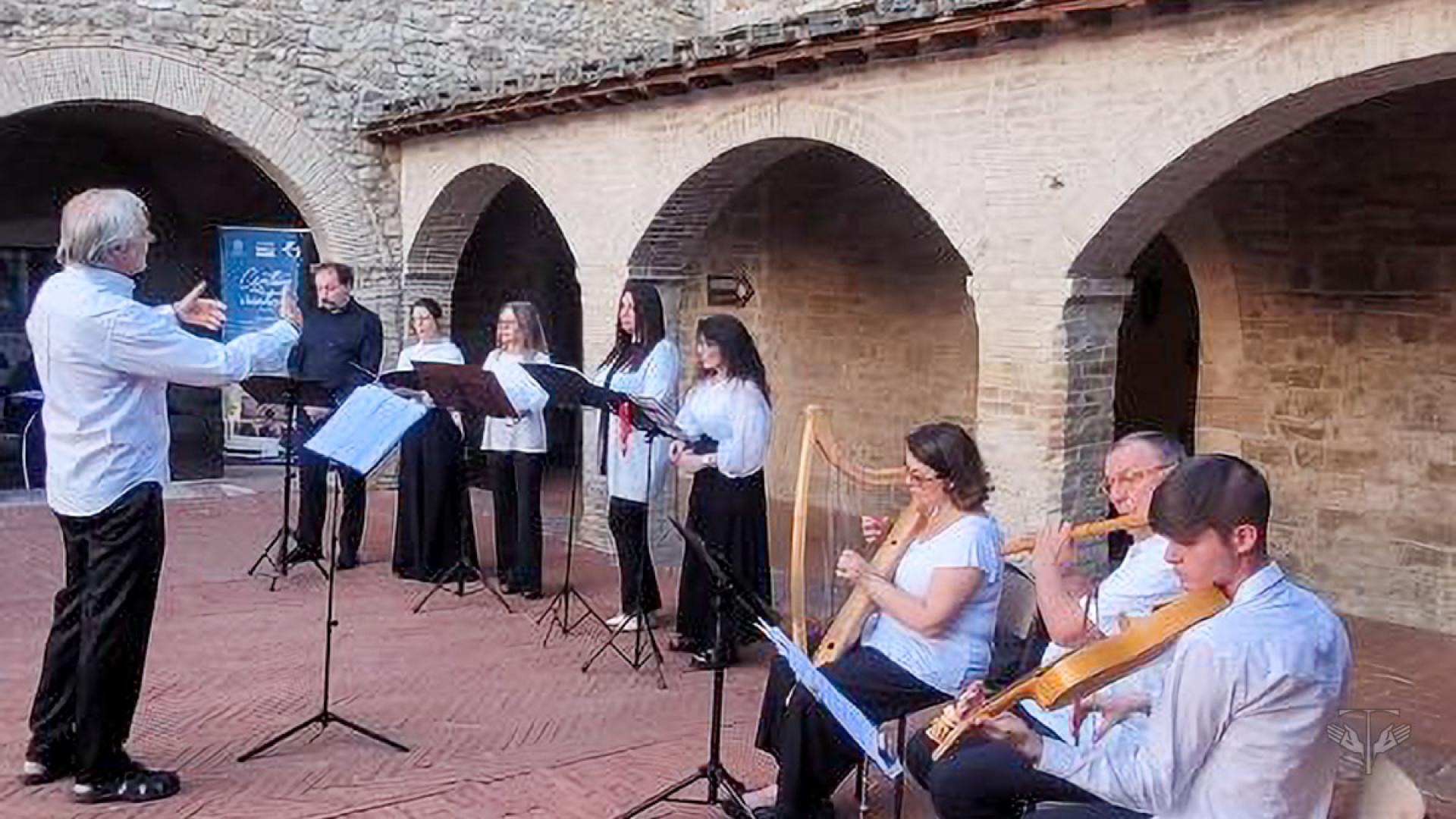
18 June 2025Over the course of 4 evenings (14th June, 5th July, 16th August, 20th September) the ARMONIOSOINCANTO Vocal Group will perform the lauds of the Laudario di Cortona in the evocative square in front of the sanctuary of San Damiano, in Assisi, dividing them according to theme and liturgical time. The last evening, on the occasion of the feast of the Canticle, will be dedicated to the performance of the Franciscan-themed lauds, which probably testify to some echoes of the original melody with which the Canticle of the Creatures was sung, now lost.
The Laudario di Cortona n. 91 is a manuscript codex, preserved in the Municipal Library of Cortona (Italy), of the second half of the thirteenth century containing a collection of lauds, 46 of which have musical notation. The first 16 lauds are dedicated to Our Lady, while the others follow the liturgical calendar: Christmas, Easter, Franciscan feasts and others.
The codex represents one of the first examples of the vernacular, a form of expression closer to the sacred folk traditions. Especially in Central Italy, where Christianity and in particular Catholicism was more felt, the form of the lauda took hold in a predominant way also following the teachings of St. Francis. The melodies in the laudario are influenced by pre-existing Gregorian melodies contaminated by refrains of dances and popular songs: therefore, the sacred in the popular. The Christian of the time was thus closer to the message of the sacred texts through an intelligible linguistic mediation.
The ARMONIOSOINCANTO Vocal Group made the recording of the entire work, trying to highlight all those aspects of medieval religiosity linked to the popular message expressed by the sacred texts in the vernacular. Founded in 1997, it is made up of variable ensembles with a prevalence of female voices who work looking for a vocal purity as close as possible to the interpretative canons of medieval and Renaissance music.
Source and info: www.centenarifrancescaniassisi.org