Hope Flowed Down the Ciliwung: A Franciscan Easter in Jakarta
“Interreligious Youth Dialogue for the Care of the Environment”: a JPIC event in Indonesia
03 July 2026On June 27, 2026, the Ciliwung River flowed with a serenity that seemed to contradict the history written in its waters. It moved slowly through lush vegetation, as though the greenery itself were reluctant to leave that corner of Jakarta. No one would have imagined the decades of pollution, urbanization, and neglect the river had endured. Yet it had learned the most difficult of virtues: to continue giving life even after being wounded.
Starting at eight o’clock in the morning, the sky covered the riverbank with a blanket of clouds. A gentle breeze made the thirty-degree heat and tropical humidity bearable. Everything in that place was green, marked by Franciscan simplicity and restraint. Wherever the eye rested, creation seemed to move forward with quiet strength.
An hour later, nearly three hundred people had gathered on the riverside esplanade, which is also home to a small Muslim community. There were young Buddhists, Protestants, Muslims, Hindus, Confucians, and Catholics. No one had come to convince anyone else. Everyone had come to hear the cry of a land that could no longer bear to be called a “resource” when, in reality, it is our shared home.
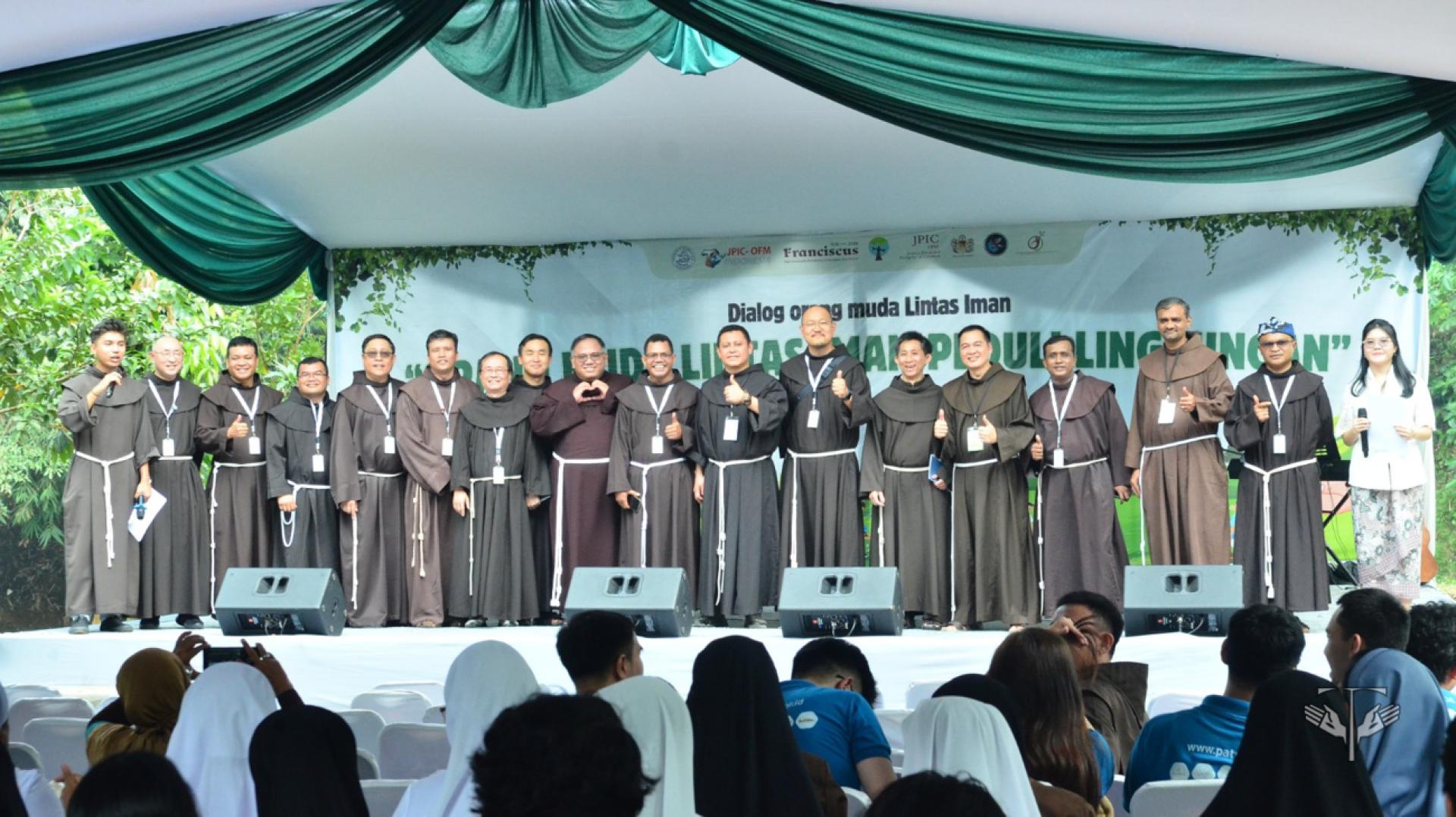
During the opening ceremony, all the friars participating in the Asia–Oceania Continental JPIC Meeting were invited onto the stage. Each received a small bird that, after a brief countdown, was released simultaneously. The gesture symbolized freedom, fraternity, and the shared desire to care for creation as one human family.
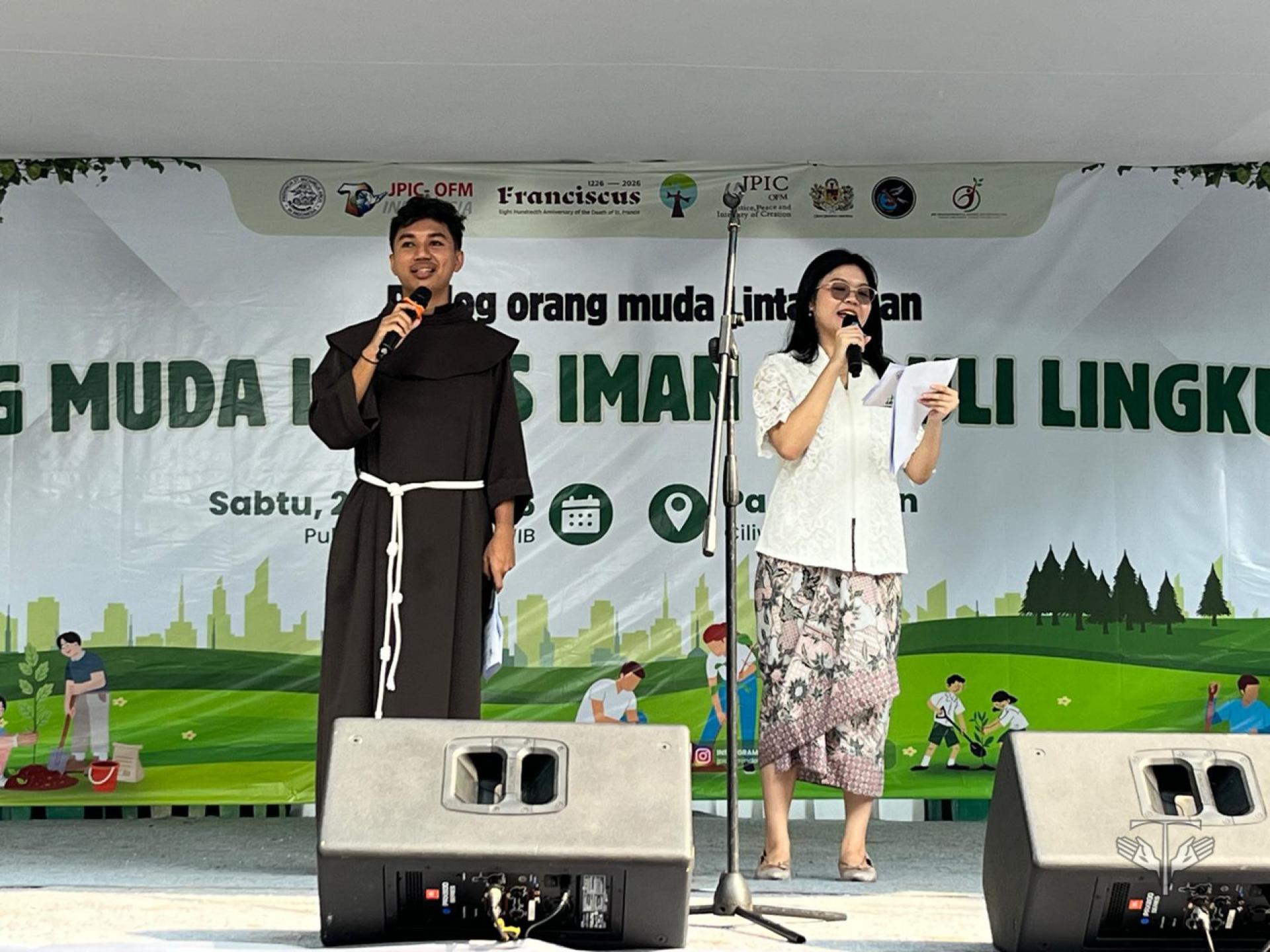
The simultaneous release of the birds perfectly captured the theme of the gathering: “Interreligious Youth Dialogue for the Care of the Environment,” organized by the OFM JPIC Office of Indonesia as the closing event of the Sixth Asia–Oceania Continental JPIC Gathering.
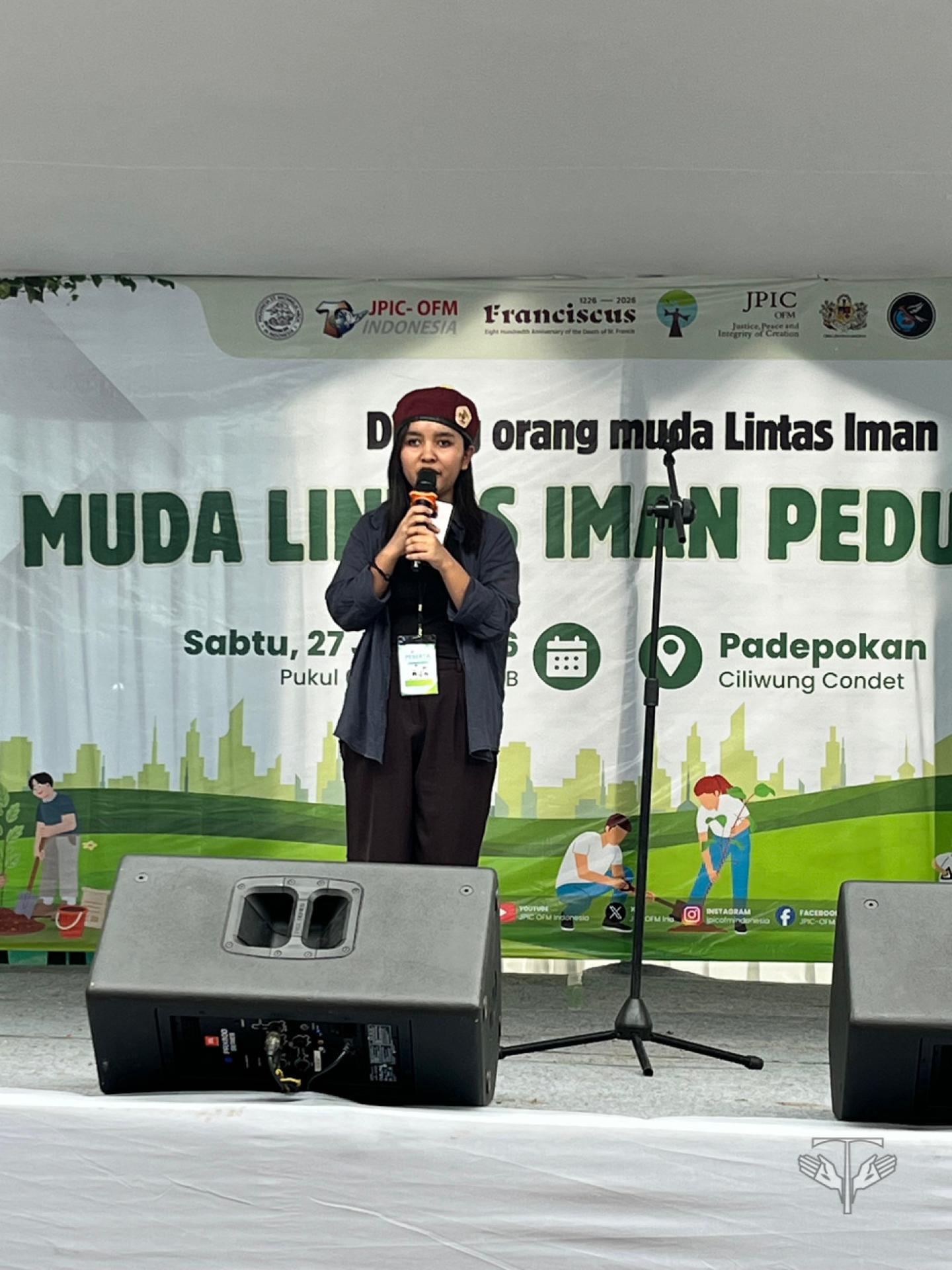
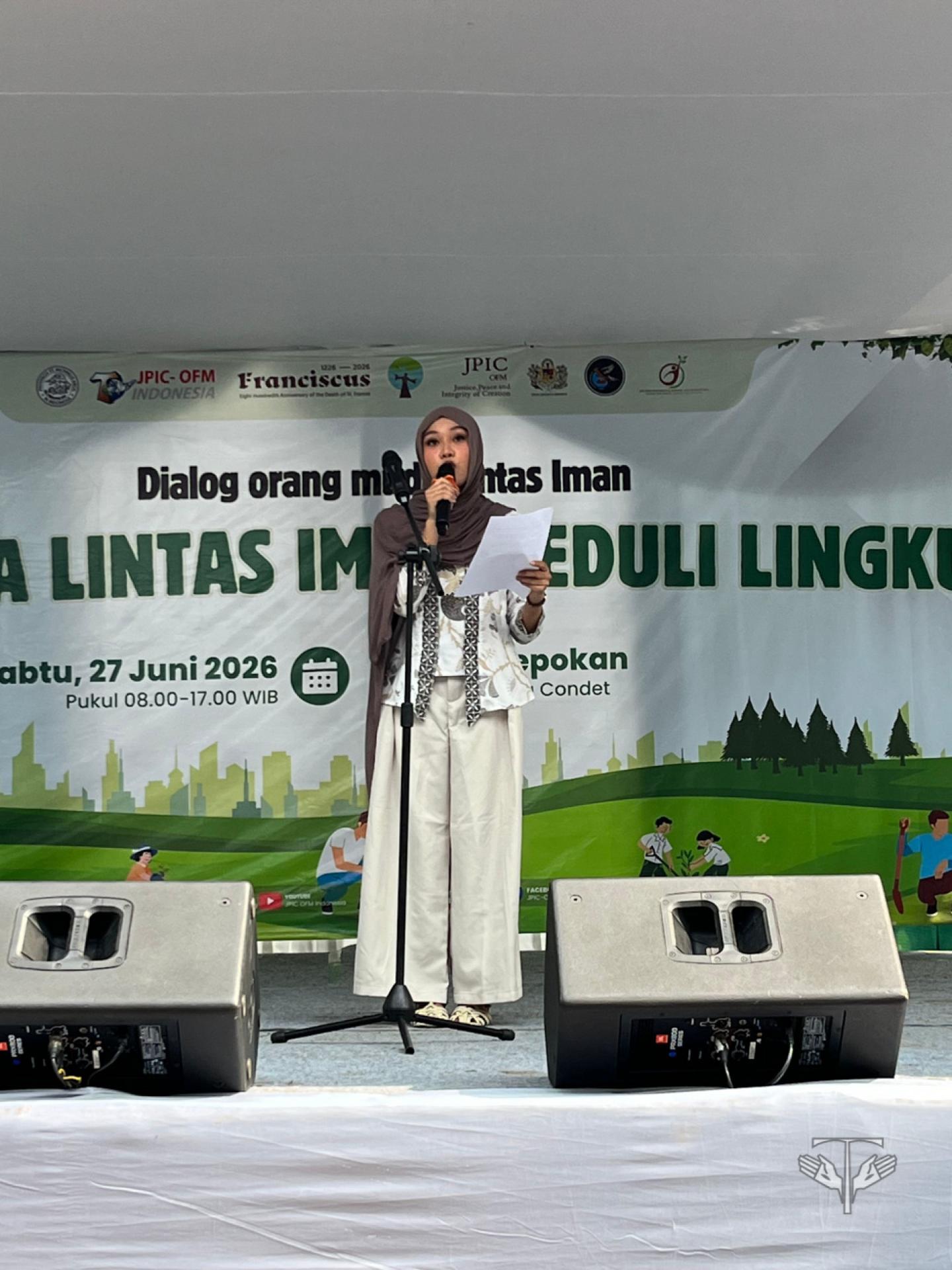
As the morning progressed, it was heartening to see young people from various religious traditions take the stage one after another. Each poetic, musical, or testimonial presentation reminded everyone that the Earth is not an object to be exploited, but a gift to be received and a responsibility entrusted to humanity.
It was not only a dialogue among religions; it was also a dialogue of hope that creation might once again unite a humanity all too accustomed to division. Through songs, moments of silence, and shared words, care for creation became a language capable of bringing together what had remained separated for centuries.
At noon, the participants made their way to the place where a statue of St. Francis had been erected on the riverbank in preparation for its blessing. There, a meaningful ecumenical prayer brought together representatives of different religious traditions in a shared act of gratitude and commitment to creation.
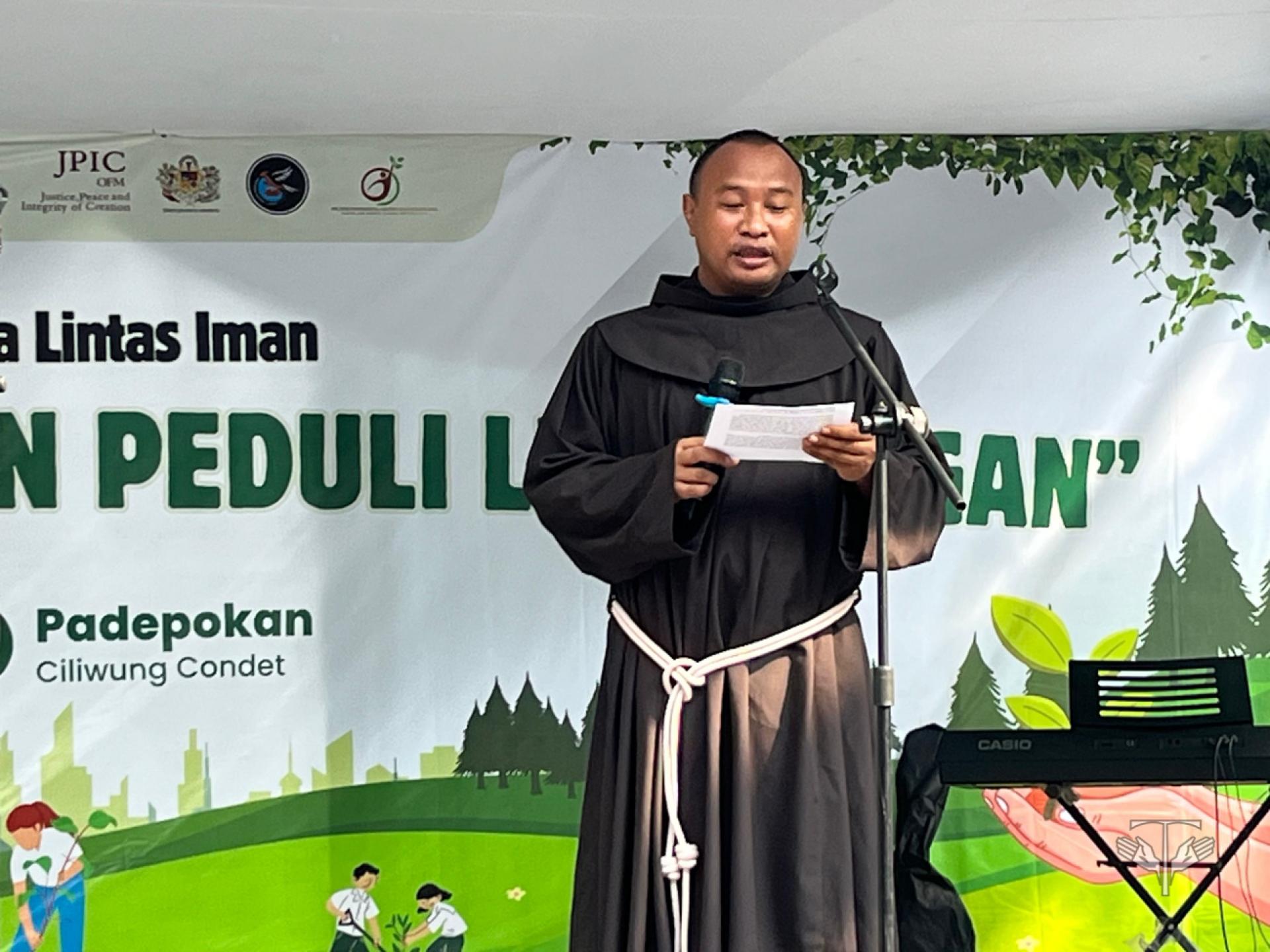
The blessing of the statue was led by Br. Lino Gregorio Redoblado, OFM, Provincial Minister of the Province of San Pedro Bautista in the Philippines and President of the East Asia Conference (EAC). The trees to be planted as signs of hope and ecological restoration were also blessed. Likewise, the fish that would later be released into the river received the blessing.
Following the prayer before the image of St. Francis, the participants planted trees as signs of hope and the restoration of nature. Afterwards, lunch brought together people of different religions and Christian traditions around the same table. Without changing seats, the tables became spaces for dialogue. In an atmosphere of respect and mutual listening, participants shared experiences and reflected on the challenges of integral ecology, discovering that care for creation is one of the most powerful common languages for interreligious encounter and collaboration.
Once the group work had concluded, the participants boarded small boats and travelled along a stretch of the river. The boat ride allowed them to witness firsthand the reality of the Ciliwung. Its waters are still marked by pollution and the waste accumulated over many years, but also by the many community initiatives working tirelessly to restore the river to life. Along the way, participants witnessed various clean-up efforts, particularly those focused on removing plastics and other debris that continue to threaten the ecosystem.
Midway through the journey, a symbolic gesture took place: the release of the fish that had been blessed earlier in the day. The bags were gently opened, and hundreds of small fish returned to the river as a sign of hope and a commitment to restoring life where deterioration had prevailed for so long.
Upon returning to the meeting point, the working groups presented their conclusions. Between presentations, Franciscan sisters involved in JPIC ministry performed songs accompanied by graceful choreography. For a few moments, dialogue gave way to beauty.
After several hours beneath overcast skies, the clouds finally parted, and the afternoon light illuminated the lush green vegetation, revealing a landscape of unexpected colours. Nature seemed to respond with its own harmony to the gestures of care and hope sown throughout the day.
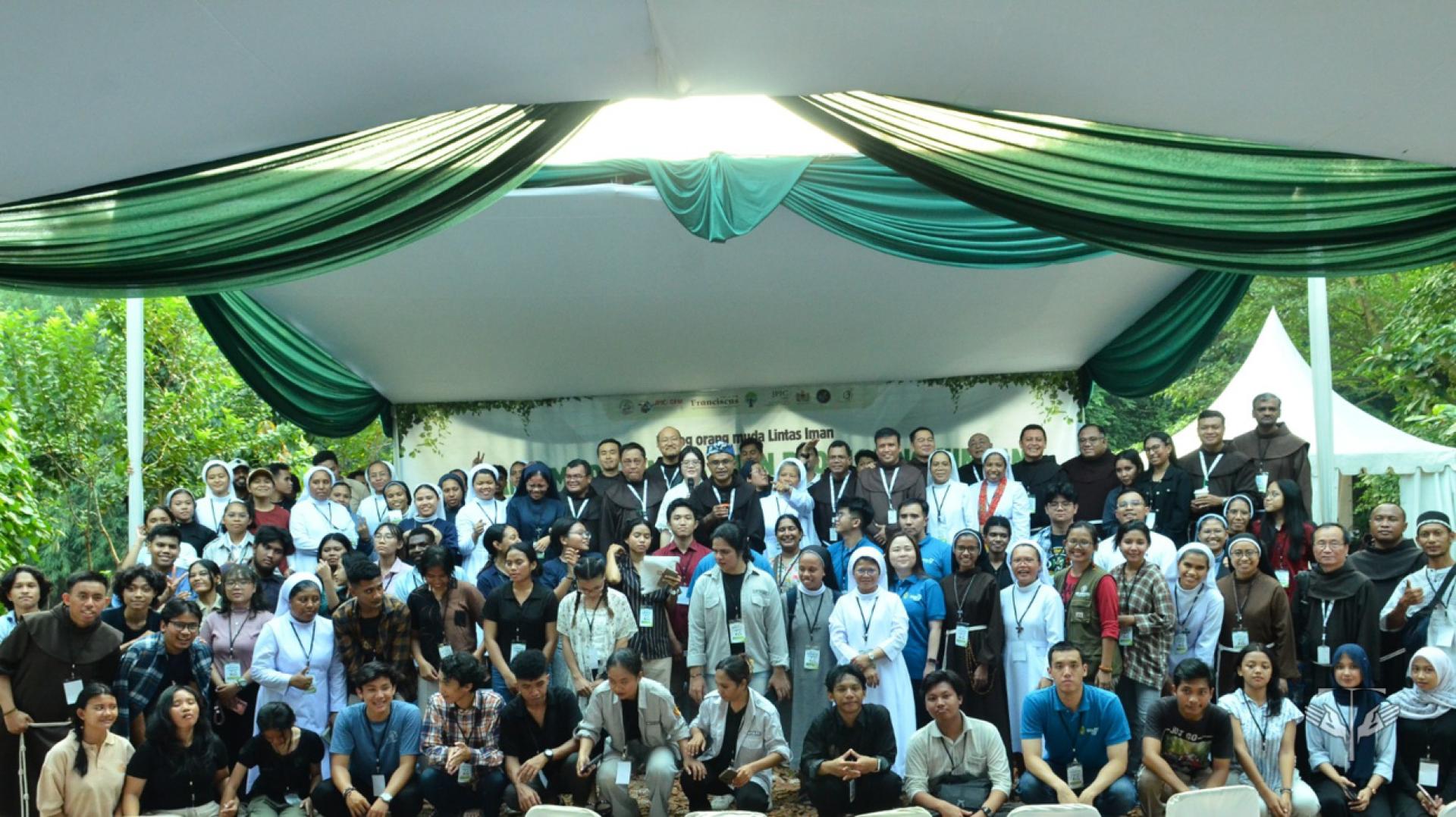
Before the gathering concluded, all the participants assembled for the official group photograph—a keepsake preserving the memory of an event in which people of different religions walked together in support of the care of creation. Shortly afterwards, a traditional dance brought the gathering to a joyful close. Through it, the host community once again expressed the richness of its culture and the warmth of its hospitality.
As the Ciliwung continued its journey toward the heart of Jakarta, hope continued to flow within all who had shared that day. The newly planted trees, the fish returned to the river, and the dialogue among people of different religions all served as reminders that life always finds a way to be renewed, even where it once seemed diminished.
Perhaps the true Franciscan Easter experienced in Jakarta was the realization that caring for creation is itself a proclamation of hope: that, in the light of faith, life can always find a way through the world’s wounds.
Br. Daniel Rodríguez Blanco, OFM
JPIC General Office Director