Pope Leo XIV's encyclical "Magnifica Humanitas" published
On the custody of the human person during the time of Artificial Intelligence
25 May 2026On the 25th May, Magnifica Humanitas, the first encyclical letter of Pope Leo XIV, on the custody of the human person in the time of Artificial Intelligence, was published. The text proposes a discernment of the change of era taking place and calls on the ecclesial and civil community to put the dignity of the person at the centre, so that technical progress does not reduce the human being to a function, given or performance.
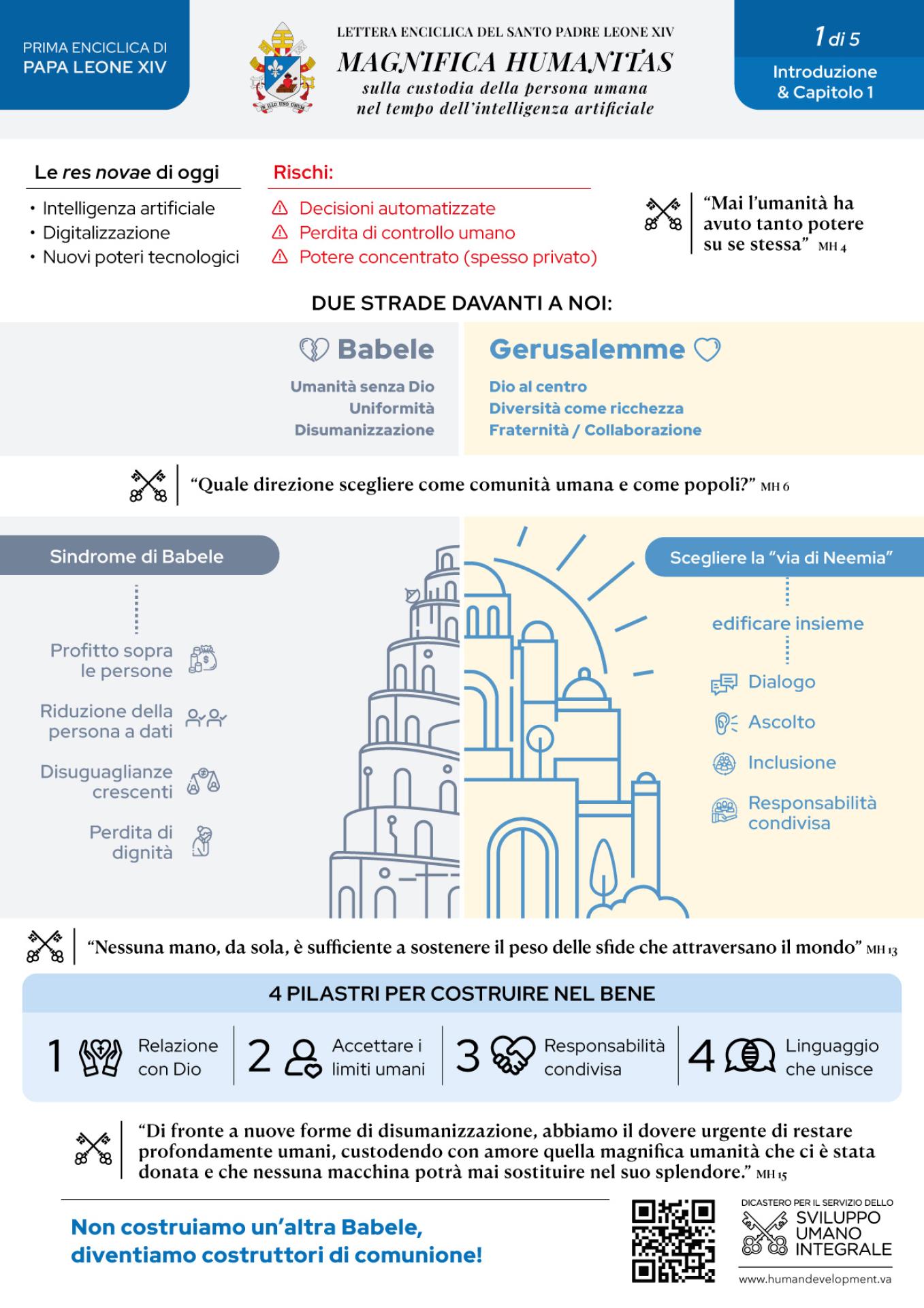
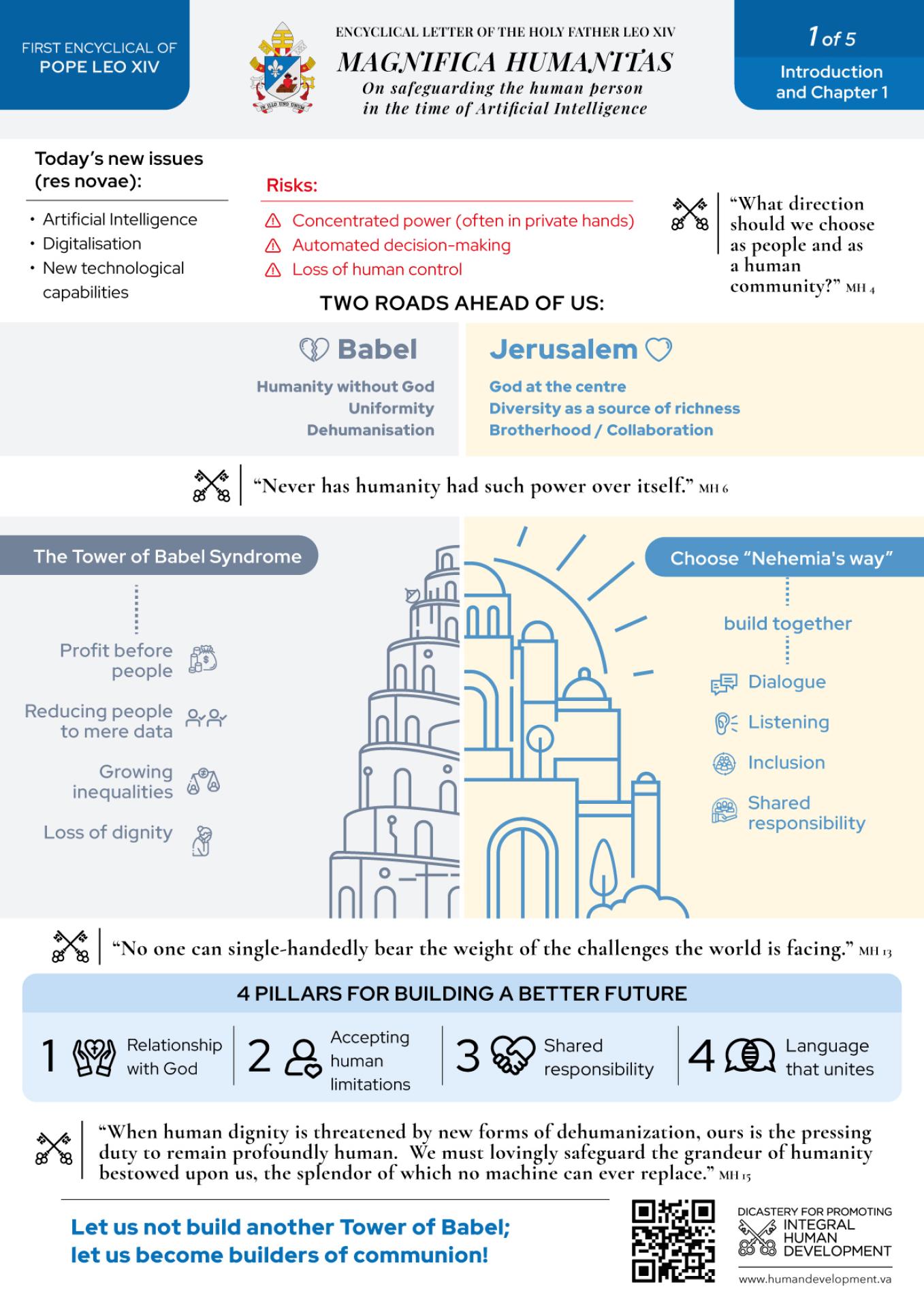
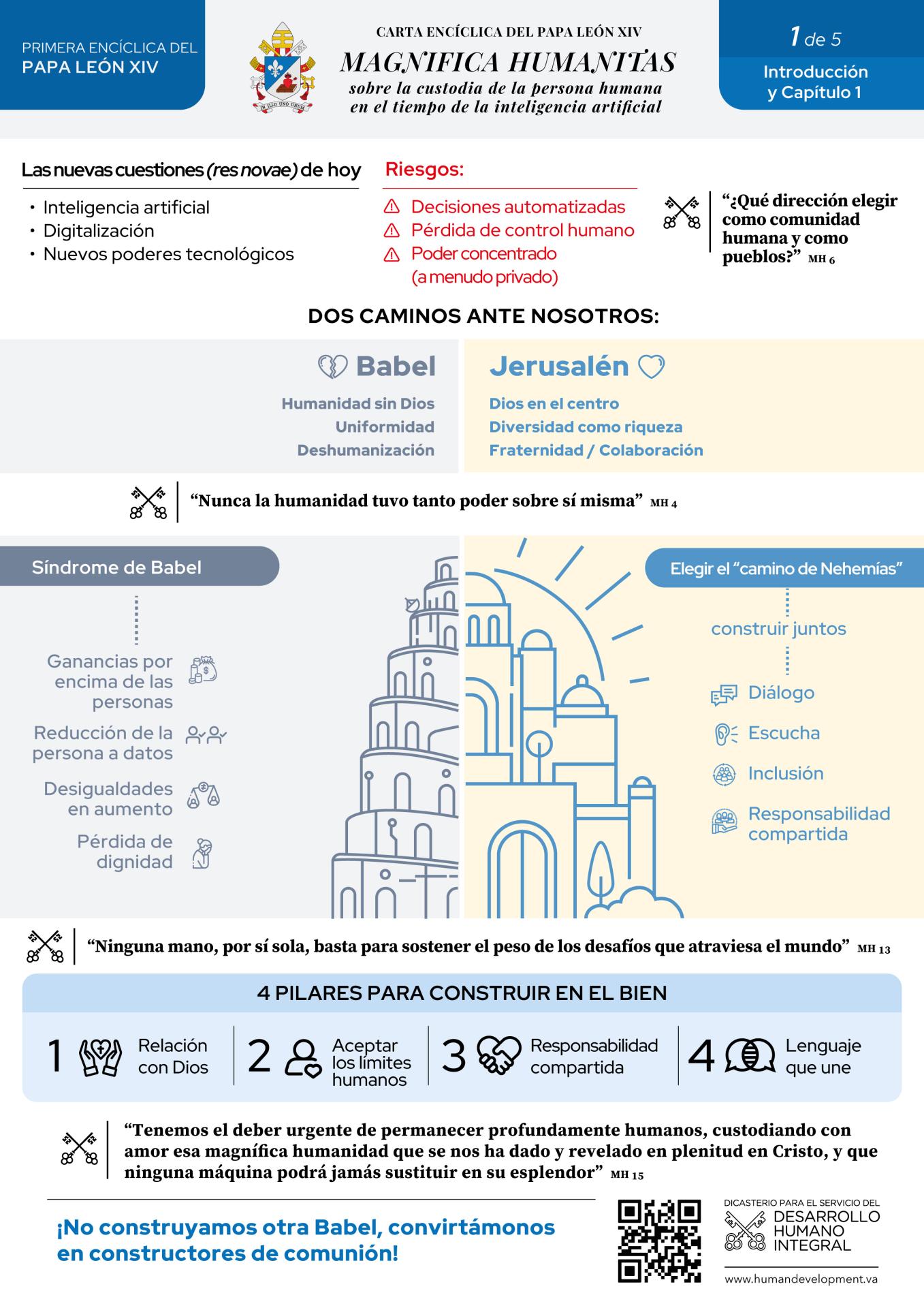
The encyclical opens by saying that in the face of the "res novae" of our time, humanity finds itself at a crossroads between "raising a new tower of Babel" and "building the holy city", that is, between a logic of self-sufficiency and power and a path of shared responsibility and communion. In this perspective, the Social Doctrine of the Church is presented as a living thought, capable of reading history in the light of the Gospel and of offering principles for thinking, criteria for discernment and guidelines for acting, without replacing political and institutional competences.
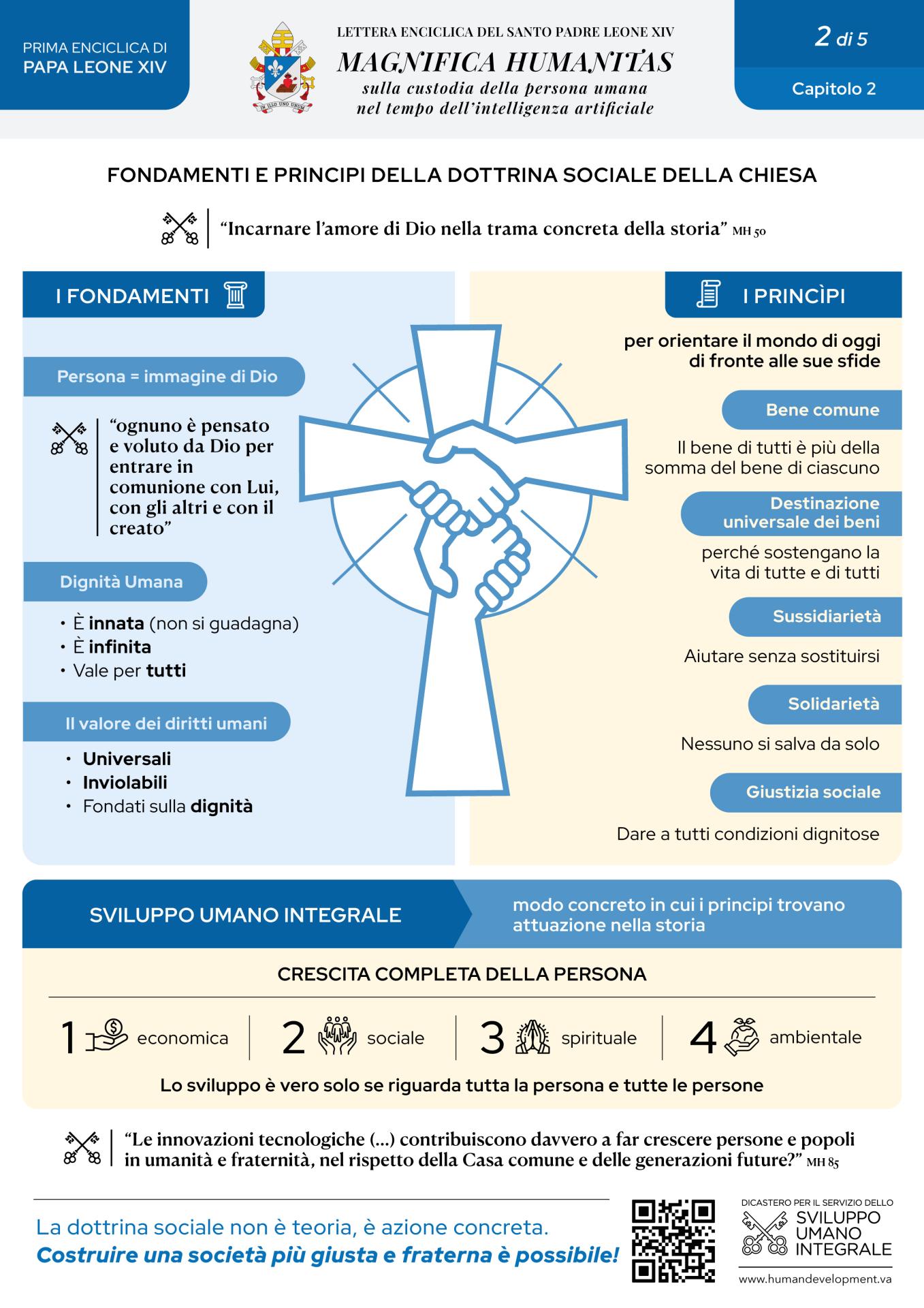
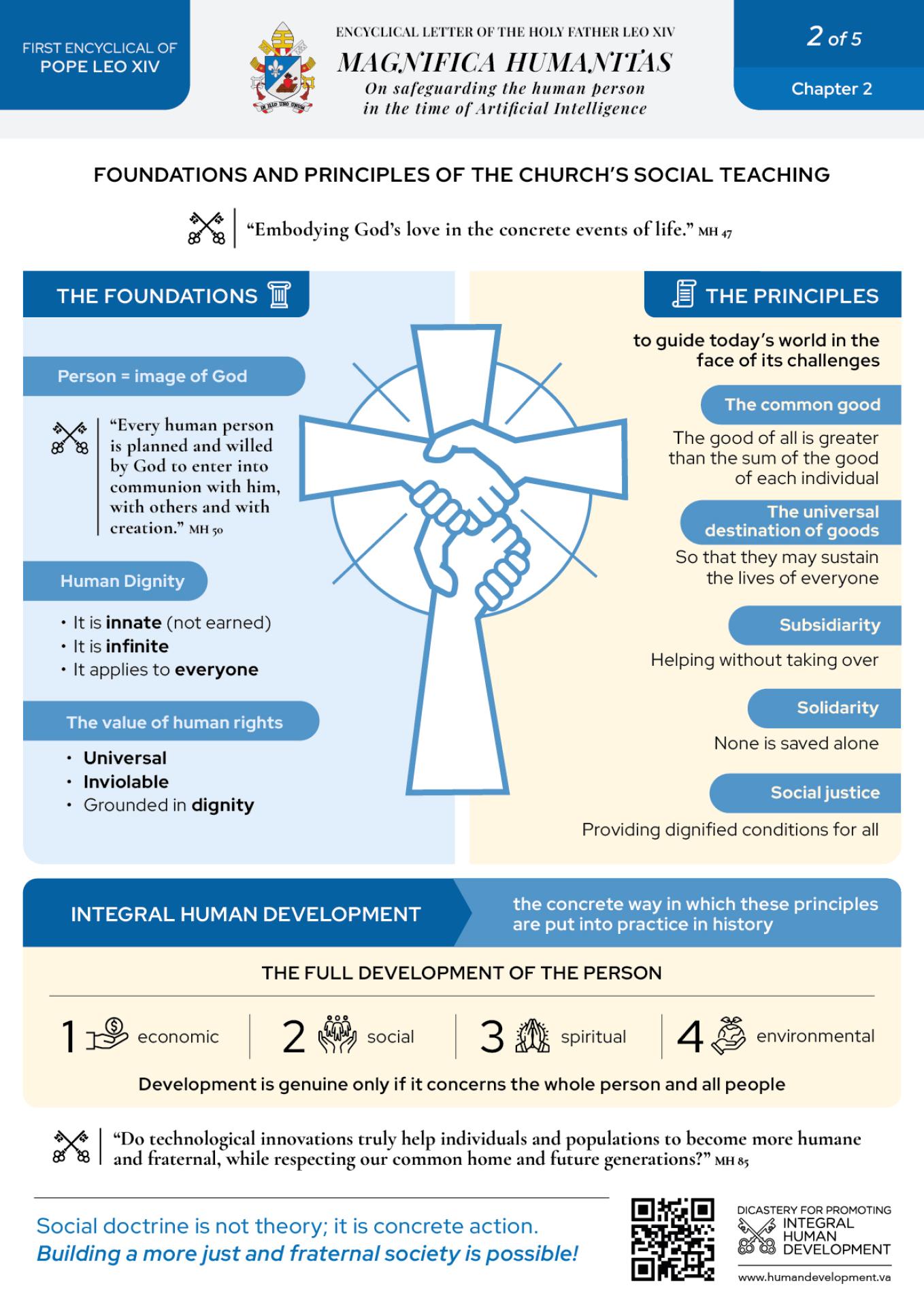
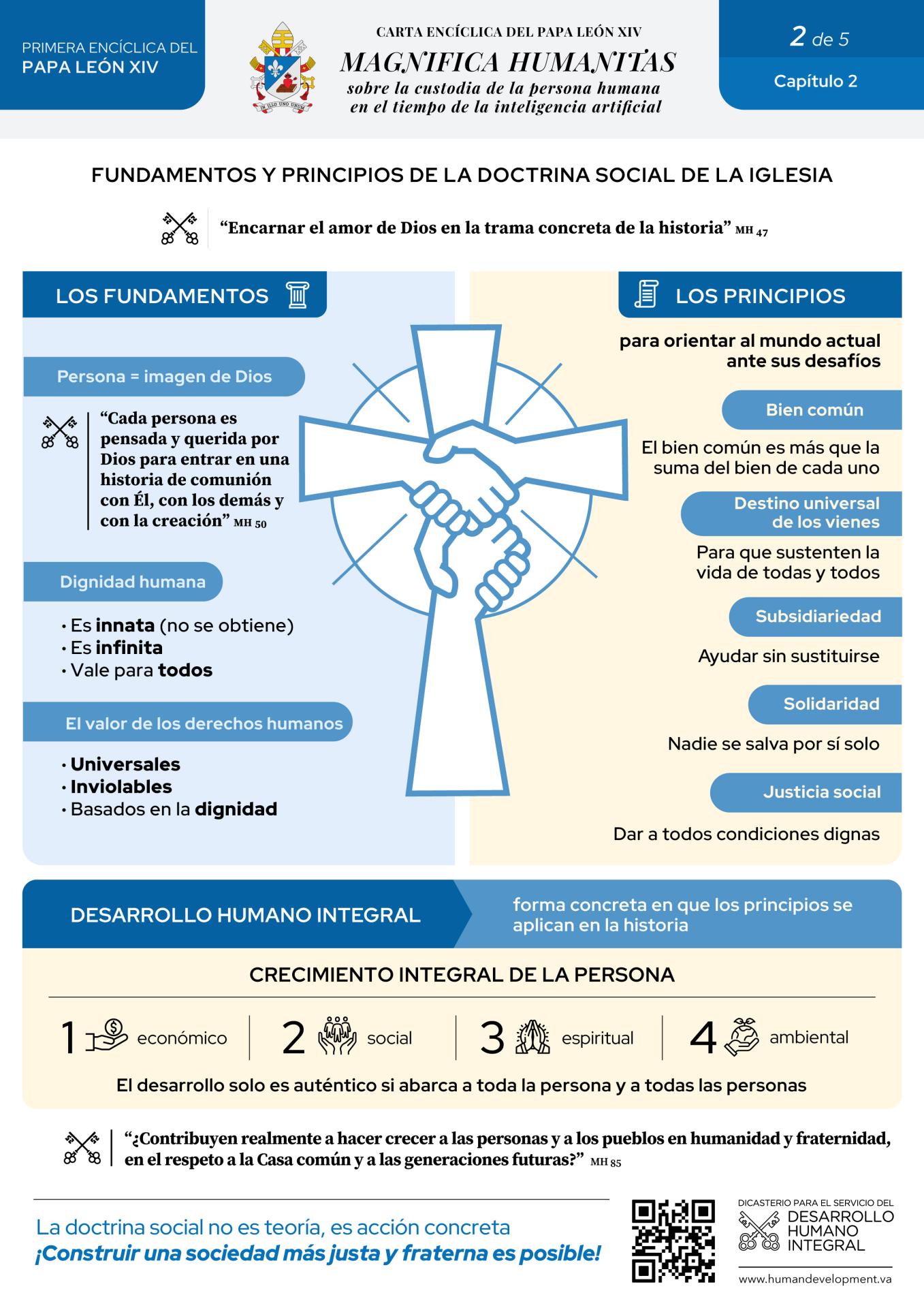
At the heart of the document is the relational vision of the person: created in the image of the Trinitarian God and called to communion. From this derives a dignity that precedes any functional evaluation and that founds human rights, starting with the right to life. The encyclical thus recalls the principles of the common good, the universal destination of goods (including digital goods), subsidiarity and solidarity, orienting them towards the horizon of integral human development.
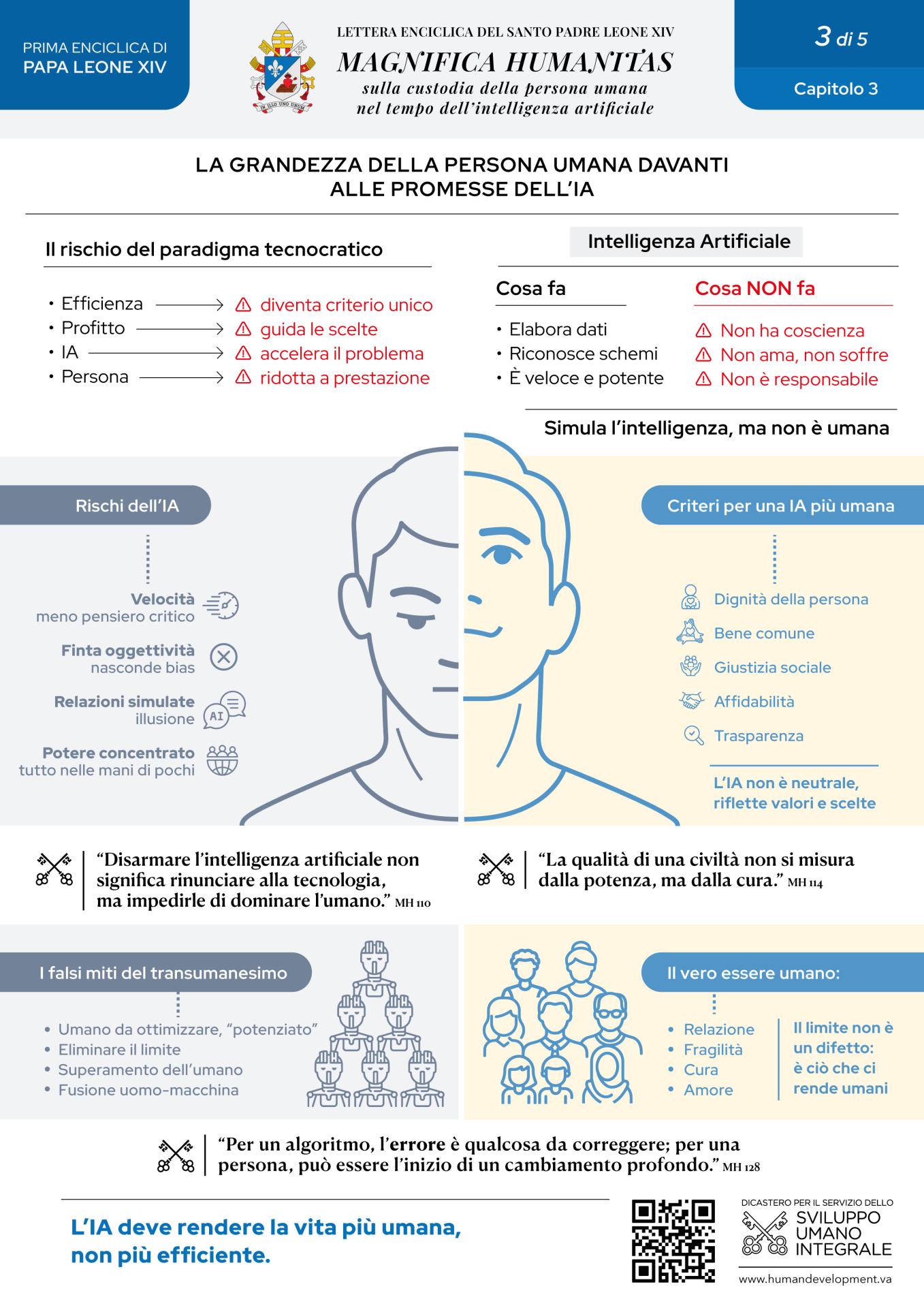
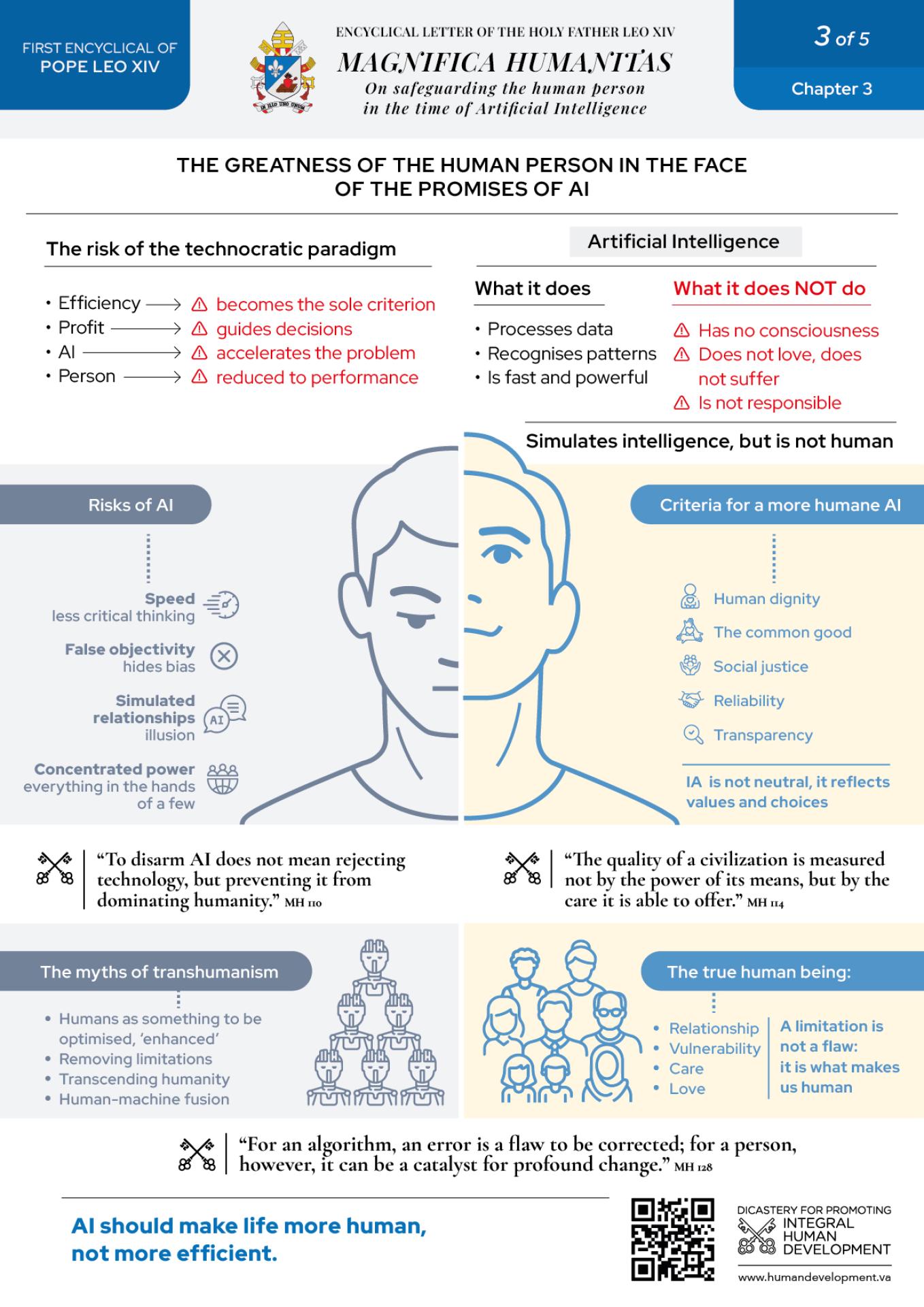
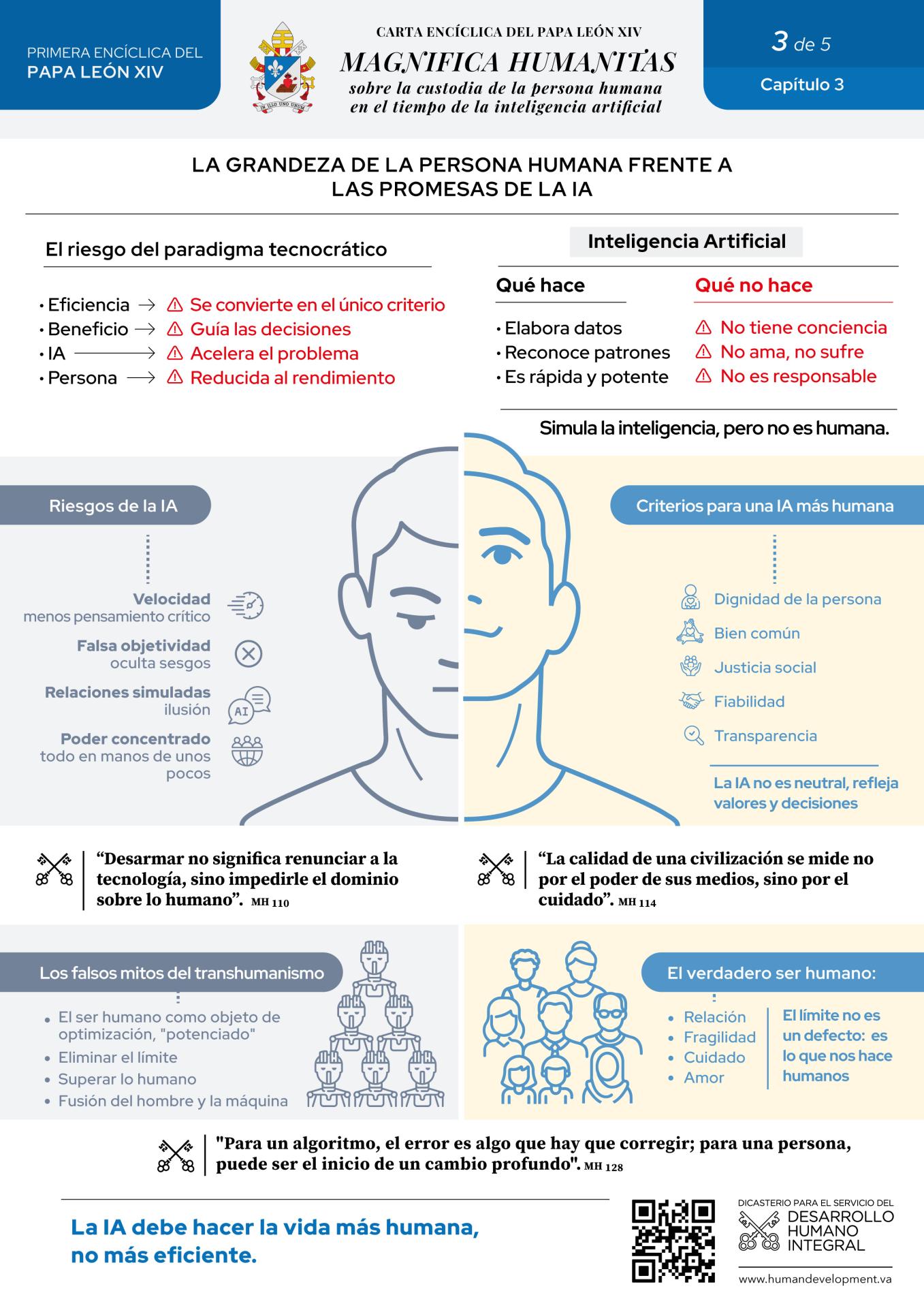
Particular attention is paid to the relationship between technology, power and the human person. Artificial Intelligence is recognised as a tool capable of real benefits, but the text warns against the technocratic paradigm and the risk of new forms of domination, inequality and control, especially when AI enters decision-making processes that affect life, reputation and access to opportunities. The difference between human intelligence and Artificial Intelligence is also reiterated, which does not know the experience of the body, joy and pain, work, love and responsibility from the inside.
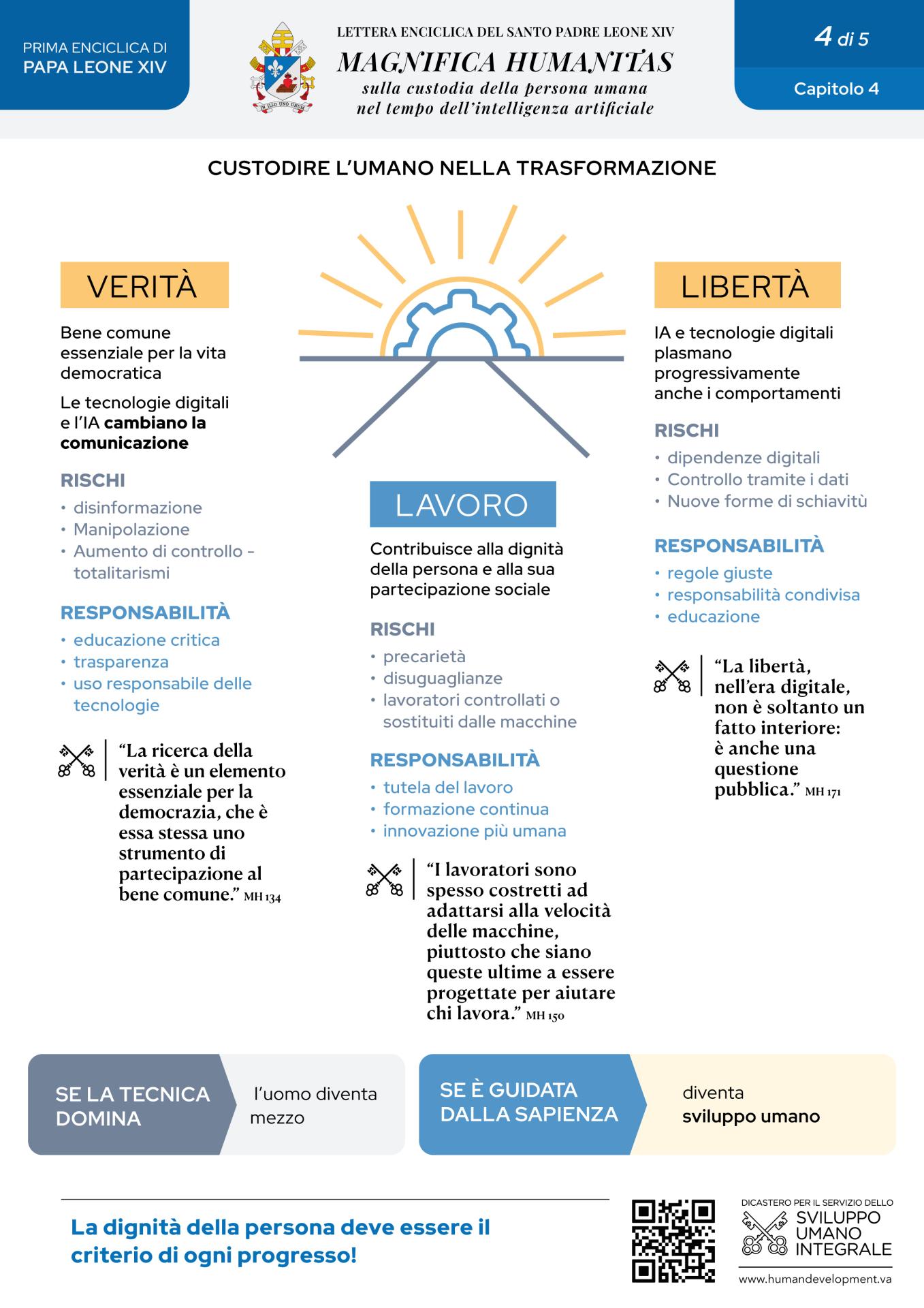
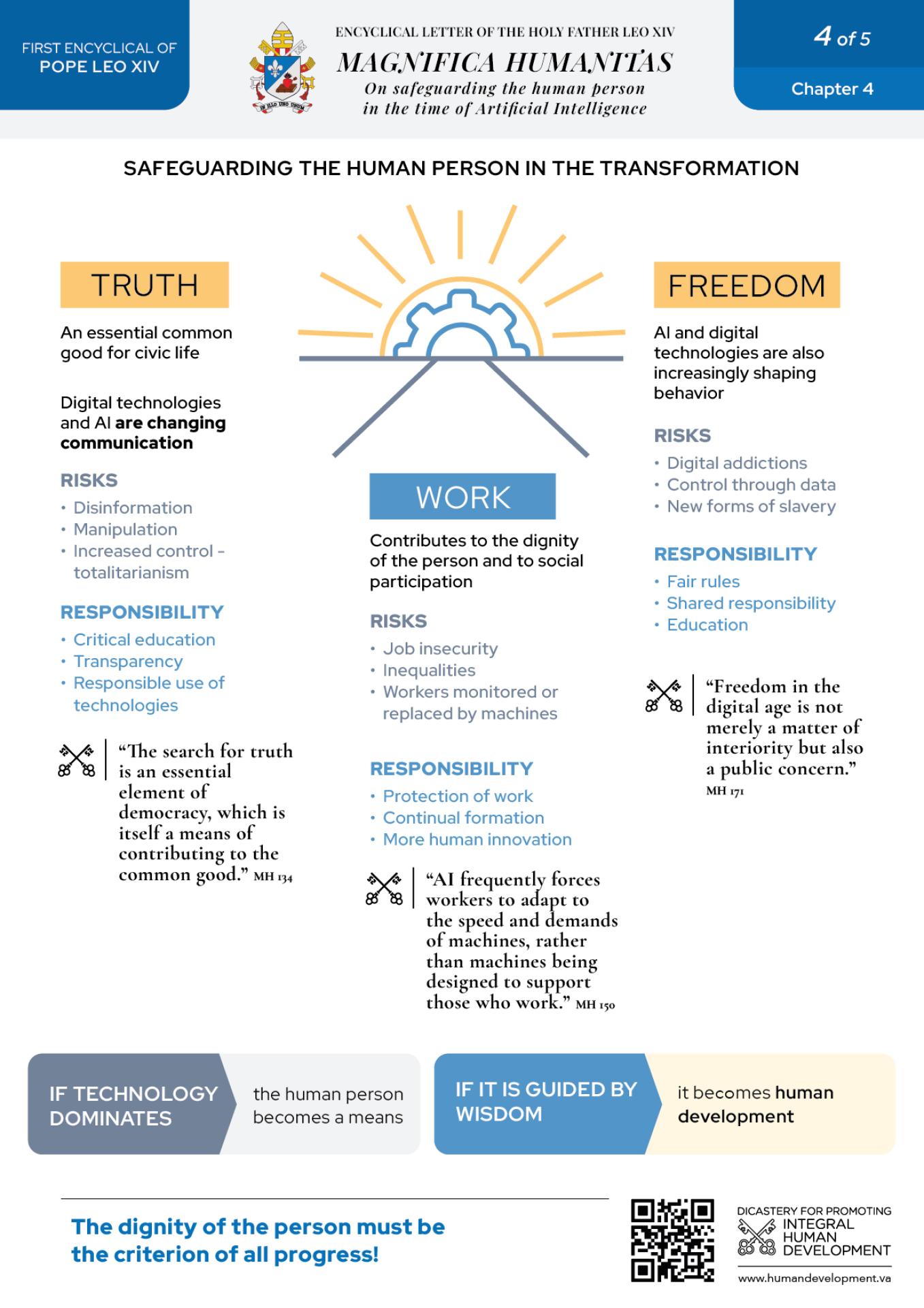
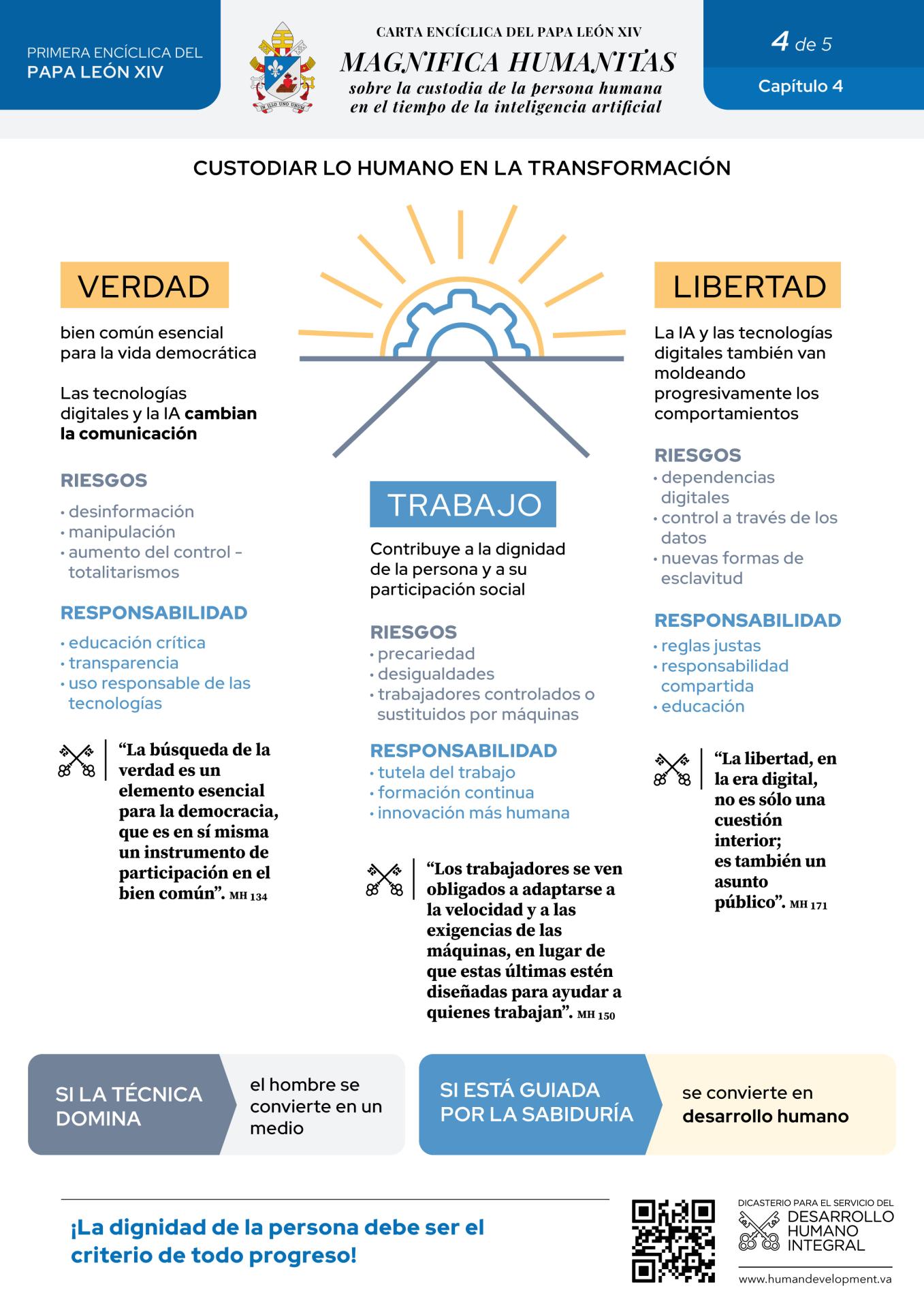
The reflection then focuses on three areas that are decisive for "safeguarding the human" in the digital transformation: truth, work and freedom. In the digital ecosystem, the quality of public communication is linked to social trust and requires critical education and responsibility. Work, as an ordinary way of participation and a dimension of dignity, cannot be sacrificed to a logic in which people must adapt to the speed of machines. Finally, freedom is also a public issue, threatened by addictions and new forms of control based on the massive collection of data.
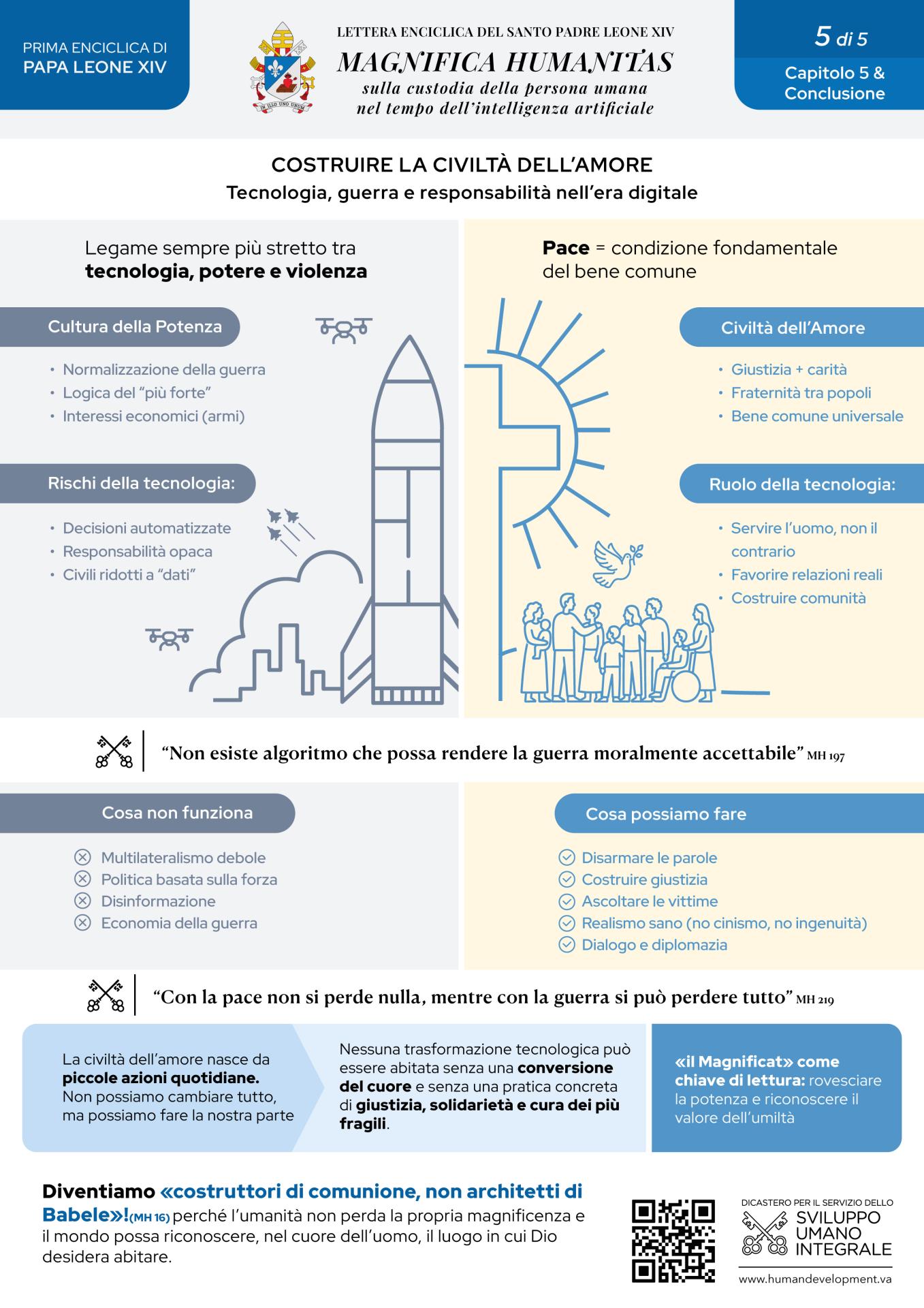
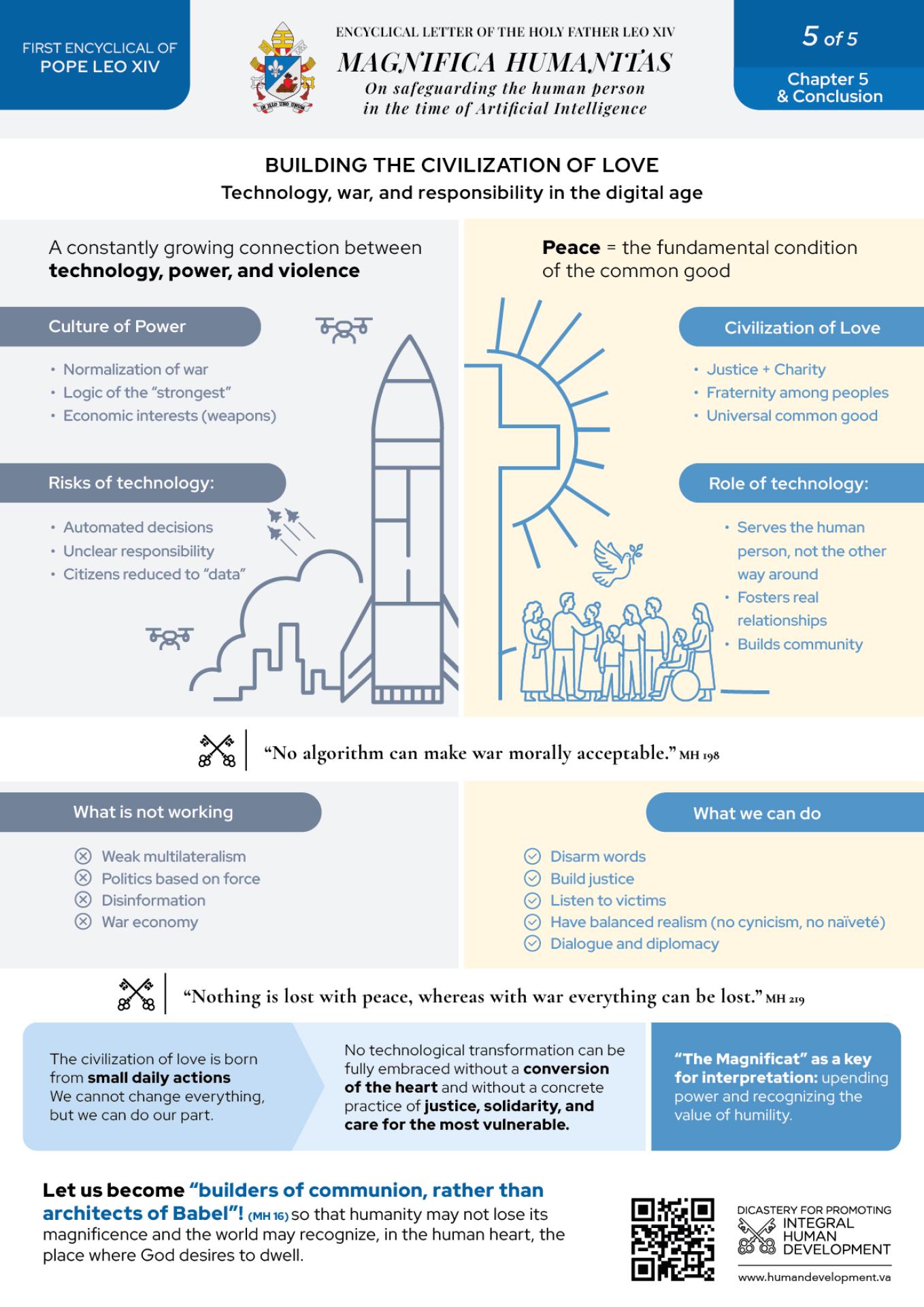
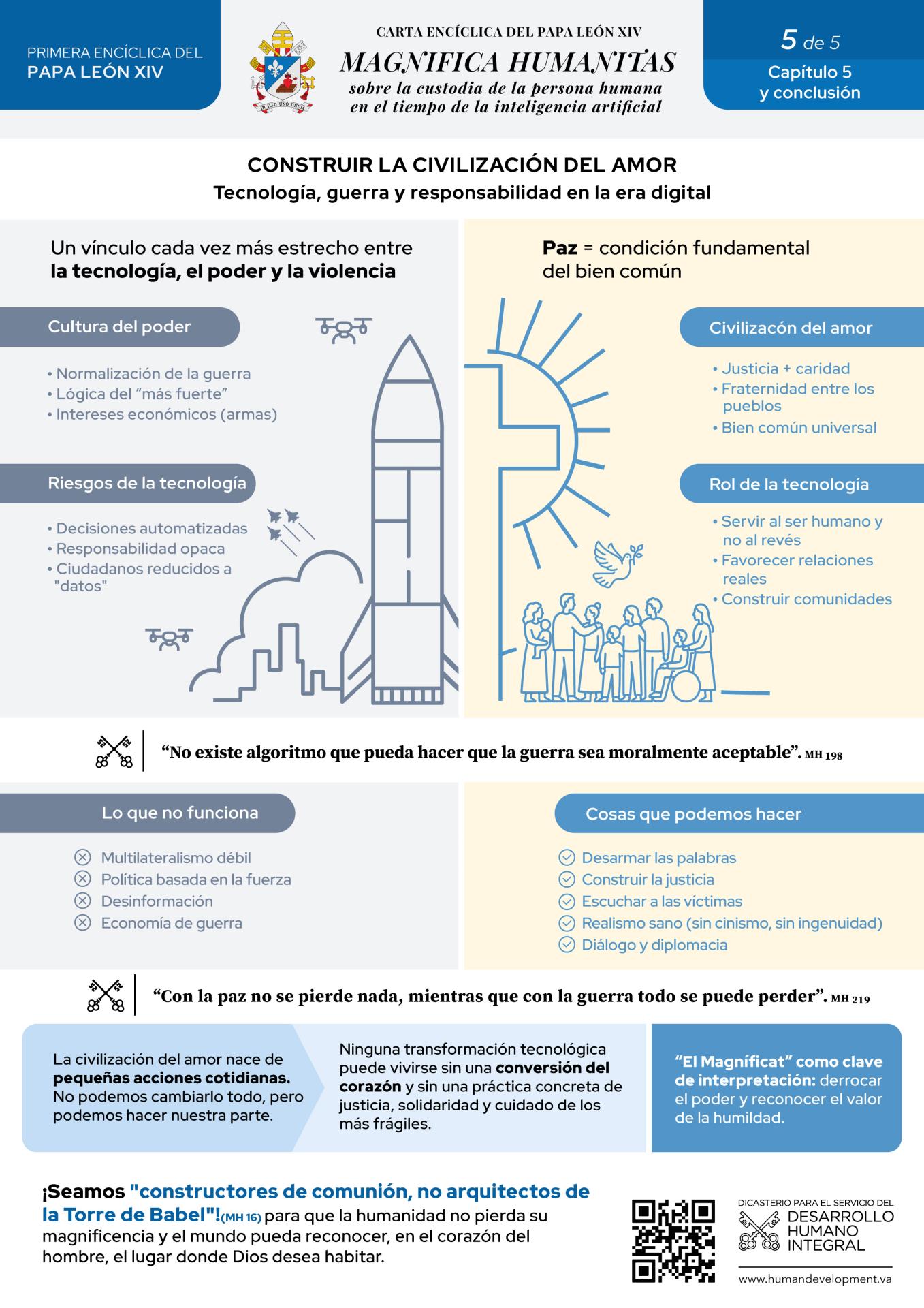
In the confrontation between the culture of power and the civilization of love, the encyclical denounces the growing welding between technology, power and violence, reaffirming that there is no algorithm capable of making war morally acceptable. As an alternative, it relaunches a civilization of love founded on justice, fraternity and dialogue, with the gaze of the victims as the criterion of judgment and diplomacy as the ordinary way of building peace.
The presentation of the encyclical ended with the Pope's speech, recalling how his predecessor Leo XIII, 135 years ago, wanted to observe "the situation of uprooted workers' families and the new forms of poverty generated by rapid industrial transformation", understanding that "the Church could not remain distant at an epic turning point that threatened human dignity". From that observation the encyclical "Rerum Novarum" was born. Today, from observation to the contemporary world, characterized by the use of artificial intelligence, even in war, Magnifica Humanitas is born. "Artificial intelligence now demands to be disarmed, freed from the logic that transforms it into an instrument of domination, exclusion and death," Leo XIV said, emphasising the importance of rebuilding – not only replacing, but "repairing bonds, restoring trust and awakening hope in the future."
A final invitation to follow Mary's example: "I invite you to turn to our Mother Mary: may she teach us to recognise the true greatness of every man and woman in loving and serving the Lord, bearing fruit in the great enterprise that we entrust today to His grace, allowing the civilization of love to mature in history and on all of you".
The encyclical Magnifica Humanitas is available on the website of the Dicastery for Promoting Integral Human Development: https://www.humandevelopment.va/it/magnifica-humanitas.html, where the full text, infographics, pastoral kit and other resources can be found.
Read the encyclical in different languages:
Deutsch - English - Español - Français - Italiano - Polski - Português - العربيَّة