The Beatification of 4 Friars Minor victims of Nazism
Notre-Dame, Paris, 13th December, 2025
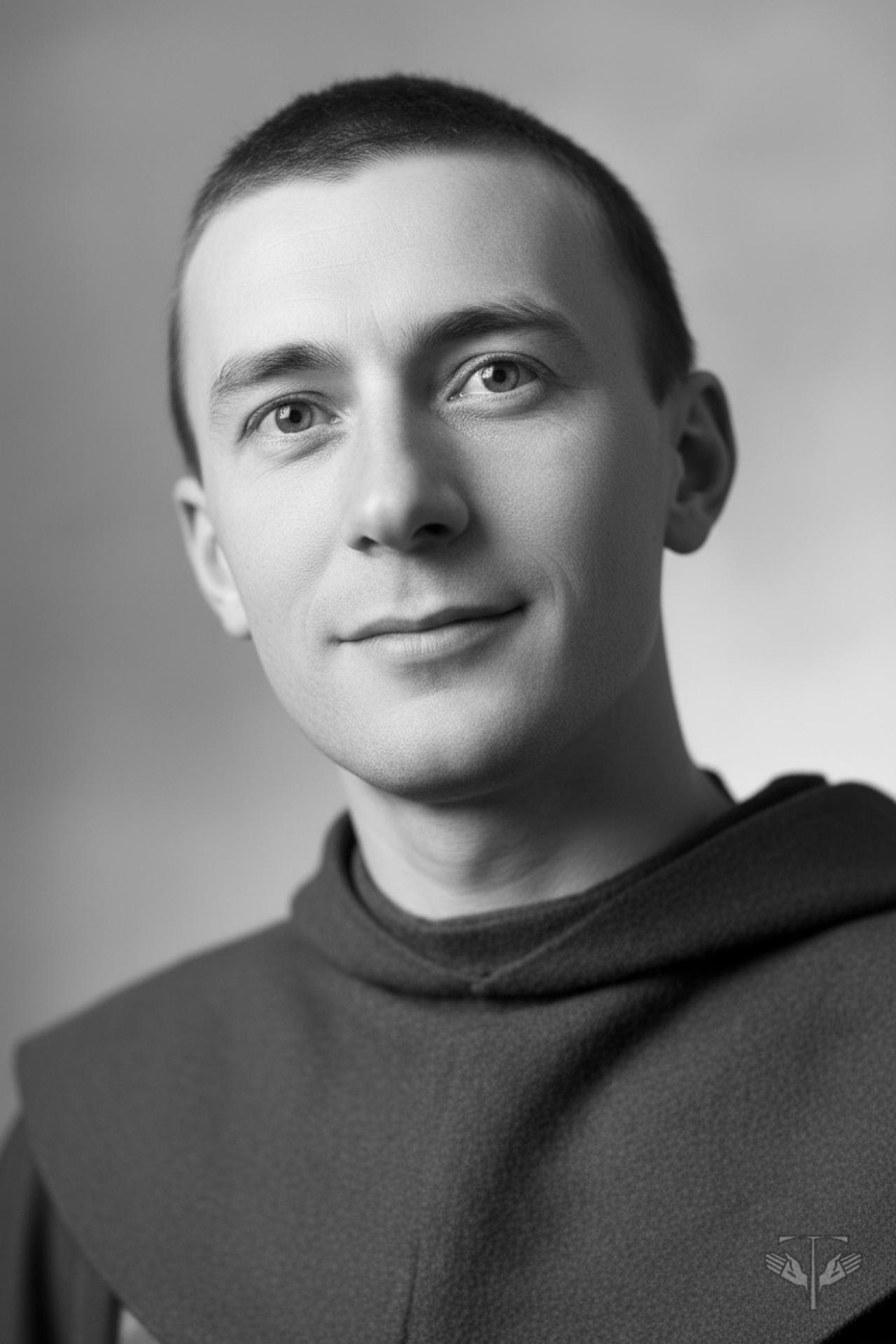
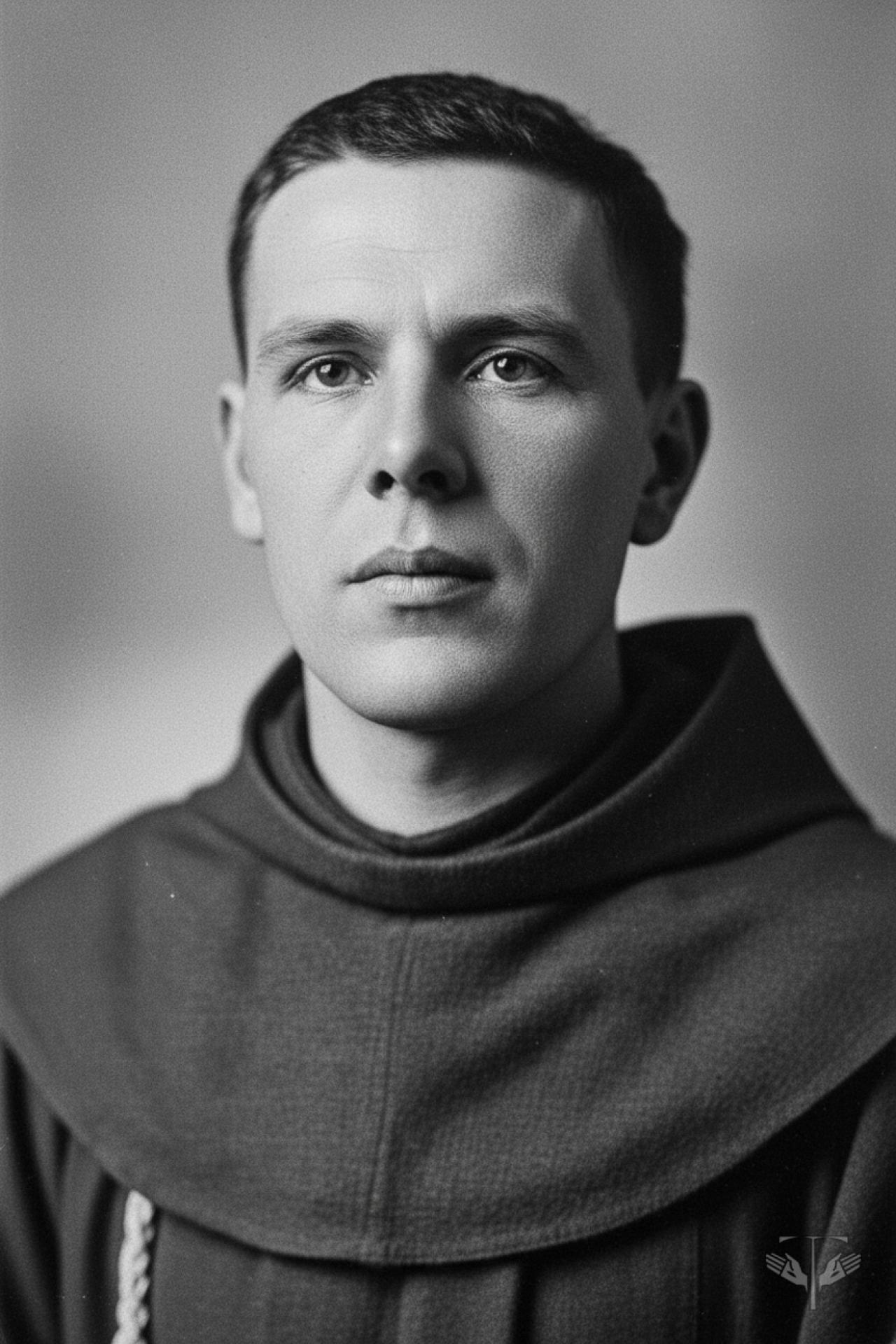
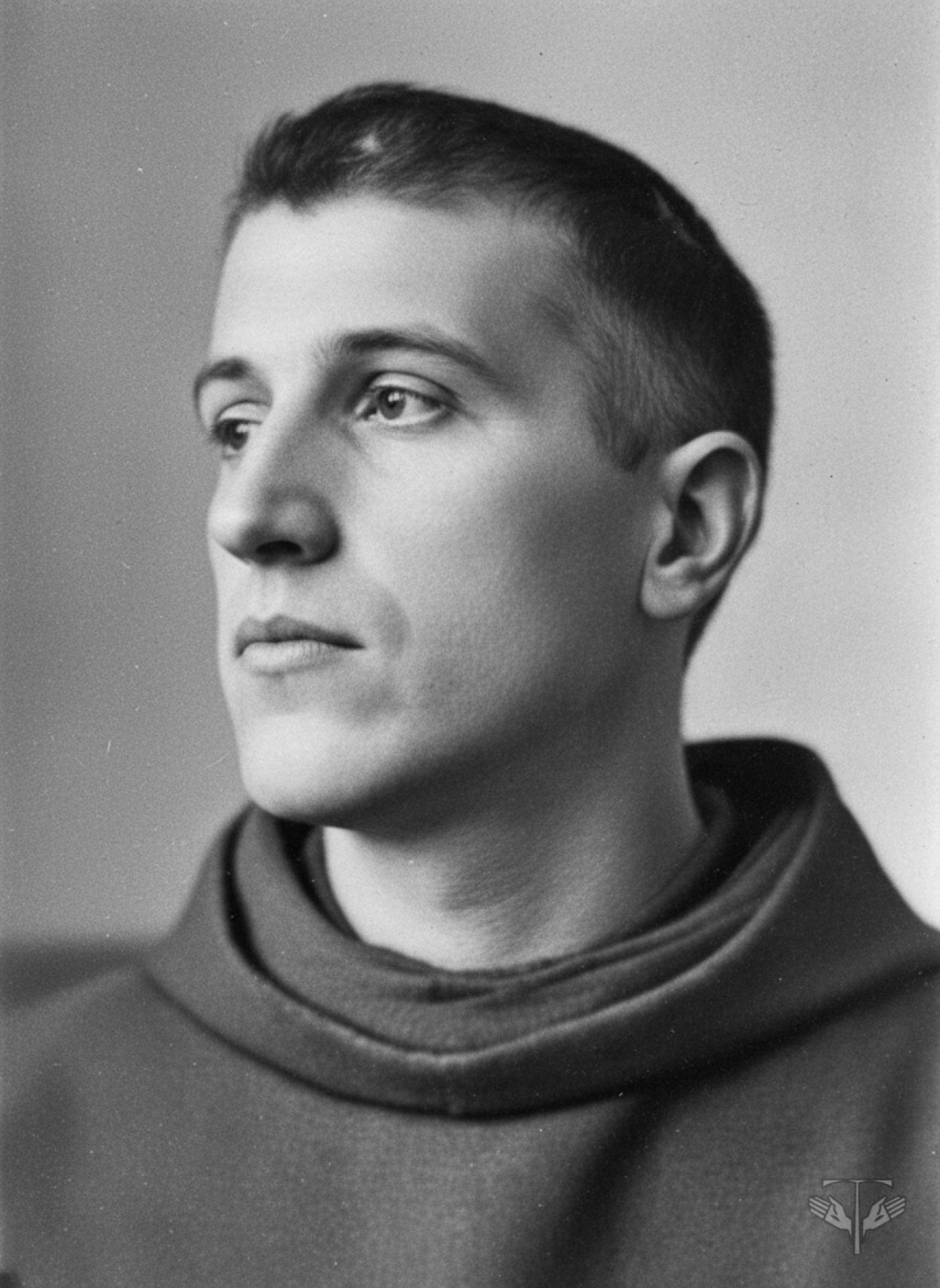
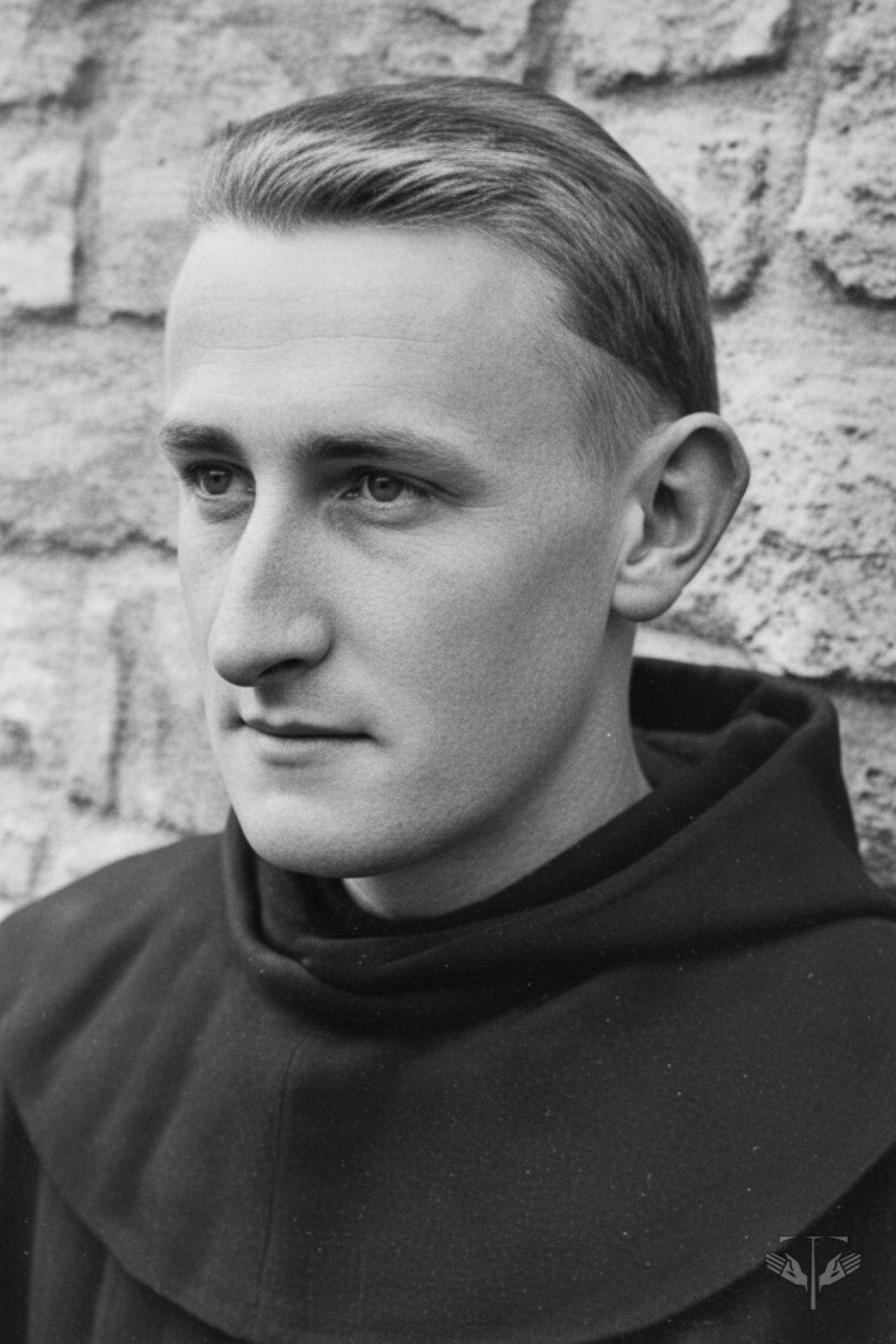
11 December 2025On Saturday, the 13th December, 2025, the beatification of four Friars Minor, the Venerable Servants of God Br. Gérard Cendrier, Br. Paul Le Ber, Br. Joseph Paraire and Br. Xavier Boucher, professed religious and students of the Franciscan Seminary of Champfleury (Poissy-Paris), will be celebrated in the cathedral of Notre-Dame in Paris. They are part of a group of fifty martyrs of the Nazi persecution against the Catholic Church (1944-1945). The Cause of Beatification was initiated by the French episcopate in 1988. Postulator of the Cause was Rev. Fr. Bernard Ardura, o.praem.
The list of martyrs, whose group leader is Blessed Raymond Cayré, diocesan priest of Albi, includes 9 diocesan priests, 5 religious (4 Franciscan Friars Minor and 1 Jesuit), 3 seminarians and 33 lay people, including 1 from the J.E.C. (Catholic University Youth), 18 from the J.O.C. (Catholic Worker Youth) and 14 scouts.
The celebration may be viewed online on the following YouTube channel:
YouTube: https://www.youtube.com/live/J84PttYMh1k?si=dfZq6i5QW4hkQZzL
Background to the persecution
In the autumn of 1942, Germany began requisitioning many young French men, aged between 19th and 25th, for compulsory labour service (STO) in order to recover labour for the metalworking industry and contribute to the war effort.
The French bishops, headed by Cardinal Emmanuel Suhard (1874-1949), archbishop of Paris, and Father Jean Rodhain, founder of the Secours Catholique (Catholic Relief Service), concerned about the fate of the deportees, established the so-called "Mission St. Paul", with which priests, seminarians, religious, members of Catholic Action and scouts left for Germany willing to carry out clandestine apostolic activity in support of young French workers.
During the summer of 1943, eighteen Friars Minor, clerics of the student residence of Champfleury (Poissy) near Paris, were also summoned to leave for the STO (Service du Travail Obligatoire). A great debate opened up between them: should they respond to the summons or avoid them, and what risks? Some friars proposed to hide or even join the resistance. At the same time, Cardinal Suhard, Archbishop of Paris, had discreetly communicated to the superiors of the seminaries his desire to see the seminarians accept requisition to provide religious assistance to the deportees. The decision then prevailed to leave to share life, work, and exile with the workers. Twelve students left on the 14th September, and they did so "brazenly" as religious and as a community, wearing the habit. When they arrived at the border, the Germans, visibly irritated by the presence of the friars, took away their religious habit and had them escorted to Cologne.
When they arrived at their destination, they were assigned to the Reichsbahn camp, in a suburb of Cologne. The friars then proposed to carry out community life in their dormitory, as far as possible, maintaining, for example, discipline and the spirit of prayer. In this way they positively influenced all the other workers who felt supported in that sad condition. The friars managed to organise a series of services; there were those who became nurses, those who became shoemakers. They formed a choir to cheer up the evenings and moments of prayer. Joy was a characteristic note of theirs. They also managed to connect with the other French priests deported to Germany and already operating in the area. In this way they were able to broaden the horizon of the apostolate even outside their own field. In particular, the enterprising Br. Gérard Cendrier developed a mutual aid service that included visiting sick workers in the various hospitals of Cologne. The Catholic militants, religious and secular who took part in the Mission San Paolo, were soon identified and monitored by the Gestapo.
On the 3rd December, 1943, the Kaltenbrunner ordinance was issued, which amounted to a decree of persecution. In line with Nazi anti-Christianity, the ordinance explicitly targeted the French Catholic apostolate amongst workers. The categories incriminated were explicitly priests, Jocist and Scout groups. The charges were obedience to Pope Pius XII, who had promulgated the encyclical condemning National Socialism "Mit brennender Sorge" ("With deep concern"); membership in Catholic associations; the clandestine apostolate. The Friars Minor were expressly accused of promoting under the cover of the religious apostolate the cohesion of French workers and prisoners against the Germans.
The friars were arrested on the 13th July 13, 1944 and transported to the prison of Brauweiler, then sent to Buchenwald and to the Kommandos of Langensalza and Halberstad that depend on it (except for one of them who ends up in Flossenbürg). The Franciscan group was therefore dismembered. Four of them would not return: Br. Gérard Cendrier, Br. Paul Le Ber, Br. Joseph Paraire and Br. Xavier Boucher

Blessed Gérard Cendrier, professed religious of the Order of Friars Minor
Gérard Cendrier was born in Paris on the 16th June 16, 1920. In his early youth he joined scouting. At the time of his promise, on May 6, 1934, he pledged to: "be a Christian, love, serve, be French, fulfill." In October 1939 he began his novitiate amongst the Friars Minor, renouncing continuing his studies in law. On the eve of the habit, he asked his parents to pray for him, with words that would later proven prophetic: "May I be able to wear the habit of the poor, but above all that Christ may be the one I wear, with whom I unite myself more and more, to the point of uniting myself to Him on the Cross if one day He asks me to."
When, in August 1943, he was called up for compulsory labour service, he generously decided to leave. With his confreres he was sent to Cologne to work for the Reichsbahn as a worker. Enterprising and proactive, he dedicated the time he had left over from work to weaving a network of relief among the neediest French workers: visiting and providing moral and spiritual support to the sick and wounded of the city's thirty hospitals, distributing books, cigarettes and sweets to them. In order to do all this, he did not even return to the camp; he barely slept and sometimes forgot to eat.
When he was identified as a Catholic and religious activist, he was arrested on the 13th July, 1944. With other Catholic militants he was taken to the prison of Brauweiler and then transferred, on the 26th August, to the camp of the International Exhibition (IVA) in Cologne. On the 17th September , the prisoners were sent to Buchenwald, and in mid-November Brother Gérard was designated to work in the underground factory at Langenstein-Zwieberge, 200 km west of Berlin. Here the harshness of life was extreme: of about 4,000 prisoners 30 or 40 died every day, and every month a new transport replaced the dead and dying.
In the prison of Brauweiler, between the 13th July and 26th August, 1944, Br. Gérard Cendrier was a support for his companions. Despite the prohibition of religious acts, he raised his voice, so that they could hear him from the other cells, inviting them to forgive the persecutors. On Sundays he sang Gregorian chants and on the morning of the 15th August, 1944 he had the strength to sing the antiphon Gaudeamus in honour of the Assumption. He did not hesitate to share a slice of his meager ration of bread. To those who reproached him for his generosity, he replied: "St Francis of Assisi, my teacher, would not have acted differently from me."
In the weeks following Christmas 1944, while working in the Langenstein factory, the privations caused him a state of extreme weakness. He fainted several times while working. On the 24th January, 1945, he made this expression: "Tomorrow is the feast of the conversion of St. Paul; I would like to suffer more, so that even my brother who is an unbeliever may find a way to Damascus and encounter Christ." He was finally given two days off. Rejected by the infirmary, on his way back to the barracks, supported by Fathers Gerbeaux and Brun, he collapsed in the snow and with open arms breathed his last.

Blessed Roger (Paul) Le Ber, professed religious of the Order of Friars Minor
Paul Le Ber, in religion Brother Roger, was born on the 1st April, 1920 in Landivisiau, where he was baptized on the 4th April. He belonged to a Breton family of five children, very religious. He entered the novitiate of Amiens in 1939 and made his religious profession in Quimper on the 17th December, 1940. He had a meditative, shy character, but helpful and accommodating.
When, in August 1943, he was called up for compulsory work service, he left with his companions to be hired by the Reichsbahn in Cologne as a worker. He actively participated in Catholic activity amongst the workers. In a letter dated October 28, 1943, he described the intense fraternal life that, even in those conditions, the young friars tried to witness: "We have arrived at the right time to show how true Christian life is enriching; Our first apostolate was to show ourselves to everyone, well united, as true brothers. Many people are amazed. For example, look at our accomplishments in the field: based on our abilities, we volunteered to offer ourselves to our peers. One of us takes care of the infirmary and is enjoying increasing success every day; another is dedicated to repairing shoes, another to the library... others of hospitals, of singing (we do a lot through our hymns, our choirs). All these voluntary jobs can only be done after the working day: in the eyes of tired comrades, our gesture is noticeable. We have earned the sympathy of everyone, even the "fundamentalists".
He then added: "In exile, it is St. Francis who attracts us. We feel an immense need for him, for his teaching, for his example, for his charm. When the opportunity arises to talk about it together, we all feel invigorated."
On the 17th September 1944 he was sent to Buchenwald and in mid-November together with Br. Gérard to the underground factory in Langenstein. He managed to get through the winter, but he was left without strength and was sick. On the 10th April 1945 the prisoners in column had to leave the camp, but he was too weak to keep up. After the second stage he managed to drag himself for a few more kilometers. An SS man shot him dead on the 13th April , 1945.

Blessed Louis (Joseph) Paraire, professed religious of the Order of Friars Minor
He was born in Vincennes on the 2nd December, 1919 and was baptized on the 5th December , 1919. He was the eleventh in a very Christian family of sixteen children. Orphaned at an early age, he was raised by his older brothers. After primary school he studied law and had a brief period of professional activity. He entered the novitiate in Amiens on the 25th August, 1939. He professed his vows on the 25th March, 1942. He distinguished himself in the seminary of Champfleury for the gift of good humour, of the Franciscan joy deriving from the ability to detach himself from everything. Called to compulsory work, he did an apprenticeship as a railway worker at the Achères station. Then he was sent, like his confreres, to Germany.
On the 1st January , 1944, from Cologne, where he was employed as a laborer in the Reichsbahn, he wrote: "Here the task is immense: a dozen priests, former prisoners transformed into free workers, about forty seminarians recruited like us: these are the workers for the divine harvest in the Cologne region, which has about 15,000 Frenchmen. If you knew how morally and spiritually abandoned, they are, you would understand better how I cannot regret my departure from France, the interruption of my studies, the sleepless nights, a very monotonous job and a life constantly in the noise! Could I, who had so much facility during my youth to instruct and form myself as a Christian, now leave my brother workers in need when I can extend my hand to them? No, Providence has sent us here and protects us in a visible way. As long as he shows us that our place is here, we will not abandon our place."

Blessed Xavier, (André) Boucher, professed religious of the Order of Friars Minor
He was born on the 3rd August, 1920 in Cheniménil, in the Vosges, and was baptized on the 7th August with the name André. He was the youngest of four children, one of whom would become a priest. The religious education he received in his family contributed to the birth of his religious vocation. In 1939 he entered the Franciscan seminary of Fontenay-sous-Bois. On the 17th September, 1940, he made his first vows under the name of Brother Xavier, in the novitiate transferred to Kermabeuzen, near Quimper, because of the war.
After being recruited for compulsory work in Cologne, Br. Xavier was employed in the Reichsbahn as a laborer. He actively participated in the clandestine apostolate carried out amongst French workers. He devoted himself in a particular way to visiting the sick and providing them with spiritual assistance. Amongst other things, in February 1944 he prepared a sick young man for his First Holy Communion.
On the 17th September, 1944, he left for Buchenwald and in mid-November he was sent to the underground factory located in the village of Langenstein. Brother Xavier was employed in the transport, on trolleys, of concrete slabs weighing 25 kilos each, intended to make the vault of the tunnels dug into the rock. Greatly weakened, he was given a month's rest in February-March 1945. Deprived of his brothers, he was alone in a shack, amongst foreigners, Poles or Russians, exposed to harassment, without the possibility of understanding or being understood. One day a foreign "doctor" declared him cured, fit for work. Brother Xavier confided to a prisoner: "This time I believe that the Good Lord wants my life, I am ready." In the evening, they brought him back from work on a stretcher. During the night of the 15th March, he died peacefully.